In Matthew 26:39, on the night before His crucifixion, Jesus prayed,
O My Father, if it is possible, let this cup pass from Me; nevertheless, not as I will but as you will.
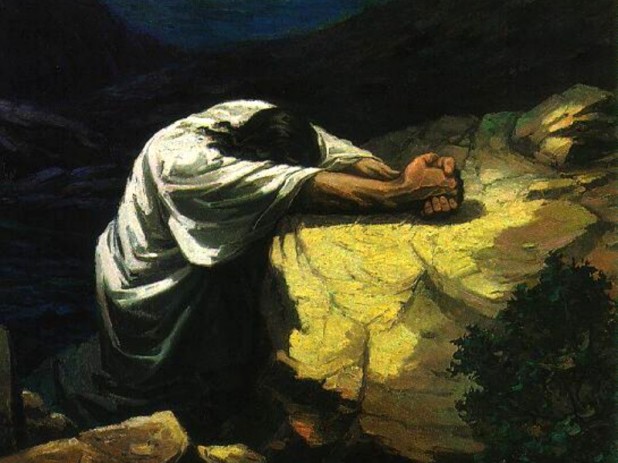
Though none of us can fully comprehend either the physical or the spiritual suffering that Jesus was about to endure, such a prayer by Jesus confuses many people. Up until this point, it seems that Jesus has known full well what He would face on the cross, and went toward it willingly and resolutely.
And yet now it seems that He is praying for a way around the cross. When Jesus prays, “Let this cup pass” is He asking for an alternate route to redemption?
While some pastors and scholars just say that such a prayer reveals the full humanity of Jesus, I am not sure the answer is that easy. I do not think Jesus changed His mind.
Let’s look at the evidence.
Scripture Evidence
First, the plan of the cross had been established from the very foundations of the world. In Ephesians 1:4, Paul writes about this plan. The fact that it would include the slaying of God’s own Son is recorded in Revelation 13:8. Before Jesus was even born, He knew that He must die on earth.
Second, numerous times during His ministry, Jesus spoke of His coming death in graphic detail and referred to it as “drinking the cup.” In Matthew 16:21 Jesus began to teach His disciples that He must go to Jerusalem to suffer and die (cf. Matt 17:22-23; Luke 9:22). He even knew many of the details, that He would be arrested, condemned, mocked, whipped, spit upon, and killed (Mark 10:32-33).
Furthermore, He occasionally used the imagery of drinking deeply from a cup to describe this painful suffering and death He would endure (cf. Matt 20:22-23). Also, in an earlier prayer, He stated that He would not pray for God to save Him from the suffering that was to come (John 12:27-28).
Third, after the prayer in the Gethsemane, Jesus continued to show willingness to drink the cup. In John 18:11, after Jesus had finished praying, and as He was being arrested in the Garden of Gethsemane, Peter tried to rescue Jesus by pulling a sword on the Temple guards. But Jesus stopped Peter, and asked him, “Shall I not drink the cup which My Father has given Me?”
So if both before and after the prayer in the Garden, Jesus knew what His death would entail, and showed complete acceptance of it, how can we understand His prayer in the Garden for the cup to pass from Him? Did He have a moment of weakness? Was He losing His resolve? Was He afraid of the pain? Did He change His mind? The answer to all of these is “No.”
The Passover Solution
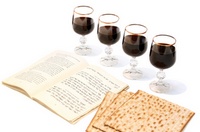 Part of the problem is that we do not understand the Passover imagery which Jesus was using. Jesus and the apostles had just come from eating their Passover meal, during which time they would have drunk deeply from four cups of wine. At that time, the table would usually share one, large, communal cup. The custom was that when the cup came to the place you were reclining, you must drink from it as deeply as you could, before passing it on to the next person at the table.
Before you could “let this cup pass” you had drink deeply from it.
If the was emptied, it would be filled again before being passed on. Often, at the bottom of the cup, there were bitter dregs from the wine. If you were the person to empty the cup, you must drink the bitter dregs as well, before you “let this cup pass.”
So when Jesus prays, “Let this cup pass from me,” He is not saying, “I don’t want to drink it,” but is rather praying, “Let me drink of it as deeply as I possibly can before I pass it on to humanity. Let me empty it. Let me drain it. Let me drink all of it, even the bitter dregs at the bottom of the cup.”
Jesus was not asking God to let Him avoid the cup, but was asking to let Him take on as much of it as He possibly could, and if possible, if it was God’s will, to let Him drink every single drop, down the bitter end.
This is how the statements about not doing His own will, but the will of God, are to be understood (Matt 26:39, 42). Jesus was not praying to bypass the cup of pain and death, but was praying to end the reign of sin and death once and for all, in Himself, on the cross. Jesus was praying to finish the plan, to bring it to completion. Was He looking forward to the pain and suffering? Of course not. But nor was He shying away from it.
The Surprising Will of God
The seeming conflict between the will of Jesus and the will of God in Matthew 26:39, 42 was not, I think, in the will of Jesus, but in the will of God. It was God who was “struggling” with what to do; not Jesus. God was having to face a decision on whether He would let mankind suffer for our own sin, or if He would take all that sin and pour it out upon His one and only, perfectly righteous, everlasting Son. If He did that, their eternal relationship would never be exactly the same.
Which of us could ever make such a decision as God made here? He had to decide between His own Son, and all of wretched, sinful, rebellious humanity.
So Jesus, in His prayers to His Father, is saying,
God, this is why I have come. This is why I am here. This has been our plan from the very beginning. I want this. I want to drink this cup. I want to drink it fully. I want to drink every drop. I will not pass any bit of it on to the rest of humanity. I want to drink fully of the cup of your wrath (cf. Jer 25:17-38; Isa 51:17-23). This is how much I love them. This is how much I long for their redemption and forgiveness. Let me do this. This is my will. But ultimately, God, it is up to you. It is your choice.
If Jesus was uncertain of anything, it was not His own will to drink of the cup, but of the will of God to take the sin of all mankind and pour it out upon His Son. In His prayer, Jesus was asking God to finish what they had started.
This is what I love so much about Jesus. He truly is our Great High Priest, the Mediator between God and man. He did not try to pray Himself out of the pain and suffering of the cross at the last minute. No, He embraced it to the very end, praying and pleading with God to stay the course, despite how painful it would be for both of them to sever their relationship, and make Jesus become sin for us (2 Cor 5:21).
Oh, and by the way, I don’t think God hesitated for a second either. Jesus says that if we have seen Him, we have seen the Father. Therefore, God the Father loves us just as much as Jesus does. There was never any question about what would happen on the cross. Jesus did not change His mind about the cross, and neither did God the Father. Together, they endured the cross, despised it’s shame, so that Jesus could once again sit down at the right hand of God the Father in heaven, and we could be offered eternal life.
Some exegetical evidence for this view on “Let this cup pass”
The word used in Matthew 26:39 for “pass” is parerchomai, which can be translated in a variety of ways. It is used, for example, to speak of the coming to completion or the inability of God’s word to pass away until all is fulfilled (cf. Matt 5:18; 24:35; Mark 13:31; Luke 16:17; 21:33).
I am one of those individuals, however, who thinks that in cases such as the Passover meal, and in His prayers, Jesus spoke in Hebrew. What we have then in the Gospels is a Greek translation from the Hebrew that Jesus spoke. There are numerous references in the early church to a Gospel written in Hebrew.
So in Matthew 26:39, in place of the Greek word parerchomai, the Ginsburg Hebrew New Testament contains the Hebrew word abar, which means “to pass through.” This is crucial word in the account of the Passover (cf. Exodus 12:12, 23). In that account, the Lord “passed over” (Heb. pesach), the houses of the Israelites which had blood of the lamb on the doorpost, but He “passed through” (Heb. abar) the houses of the Egyptians which did not.
It appears that when Jesus prayed to let this cup pass, He used the word abar. He was not praying to escape the pain and suffering, and have it pass over (pesach) Him, but was praying to take it on fully, to experience the pain, death, and suffering of the cup of God’s wrath.
This fits perfectly with the Passover imagery. Jesus, as the Lamb of God slain before the foundations of the world, takes on the full brunt the punishment for sin, allowing His blood to be put on the doorposts of all who believe in Him, so that punishment passes over them.
The cross of Jesus is CENTRAL to everything!
Transform your life and theology by focusing on the crucifixion and resurrection of Jesus:
Fill out the form below to receive several emails from me about the death and resurrection of Jesus.
(Note: If you are a member of RedeemingGod.com, login and then revisit this page to update your membership.)

Bro, excellent piece. Makes complete sense.
Thanks Aaron. I am enjoying your “New Inklings” posts.
Hi Jeremy,
Great article however your interpretation doesn’t match up with Lukes account in chapter 22 where Jesus actually requested “Remove this cup from me”- KJV.
I did consider Luke 22:42 for this article, as did the seminary professor who taught this view to me. Whether the phrase is “Let this cup pass” or “Take this cup from me” the idea is still exactly the same. If I am drinking from a communal cup, after I drink, I will pass it to someone else and say “Take this cup.” Even if it is “remove this cup” as in the KJV, it could easily mean, “I have drunk it all, so please remove it.”
Hi Jeremy,
Thank you for your explanation. It makes perfect sense now and this interpretation is consistent with other verses in the bible such as Heb 5: 7-8 and John 12:27.
However, how would you explain Marks words when he records “if it were possible, the hour might pass from him”. When I read further I believe Jesus explains what he means again when Jesus says “the HOUR is come; behold, the Son of man is betrayed into the hands of sinners”. So I believe Jesus was praying to the Father that he is in fact ready to go through all that punishment… was it just another way of saying what he said in Matthew and Luke etc…
regards,
Jep
Further more… Jesus said the flesh is weak and the spirit is willing… Jesus wasn’t referring to the “carnal flesh” because Jesus never gave in to the flesh… Think about it… Jesus had to die one the cross!! Jesus was asking for strength for His for PHYSICAL flesh because the will of His flesh is to give in under all that immense pressure.. Heb 5:7 says that God saved Him from death… So that Jesus can die on the cross! Yes Jesus had the power to lay down His life because God gave Him the power… Jesus didnt ask God for Him to just “drink the cup” because He already knew that was His mission…
but He was indeed asking Him to remove the cup meaning He needed the strength to finish it…”not my will(the flesh giving in under the physical and mental and spiritual torture) but Gods will to be done (the strength to finish and end it all on the cross to fulfill scripture!)
This just teaches us though we are a child of God and have all the blessings and promises… We need to rely on God for strength…
As I am new to this forum, I TOTALLY agree with ALL you have said. I don’t believe that Christ was EVER afraid or had second thoughts. How could He assure me not to fear and tell me that fear is not of God and He did not give us a spirit of fear (2Tim 1:7)
That would be a complete contradictory of His Word.
It was the temporary separation.
How do you interpret verse 42?
42Again, for the second time, he went away and prayed, “My Father, if this cannot pass unless I drink it, your will be done.”
I noticed you did not cover this.
Also Jeremiah 25 was mis quoted
The cup of wrath for all the nations “they shall drink and be moved and be mad”. … “Then I took the cup at the LORDS hand, and made all the nations to drink”
the cup of the WRATH of God. Bad things come from the cup which symbolized “death and suffering”. This is why Yashu’a (Jesus) say “if possible take this CUP from me” when he prayed in the garden concerning his crucifixion. It says that during the last supper Yashu’a passed “The Cup” to his disciples. Research the fate of all the disciples. They all died torcherous and brutal deaths all except John because he did not drink of the cup. would you like to know why John was able to turn the cup down?
Hi Jeremy,
I have been thinking and trying to put all the pieces together… I still believe that Jesus flesh was still struggling through the ordeal but His Spirit was willing… I agree that Jesus wasn’t asking to be saved and was in fact saying He is ready to drink the cup but It appears that’s Jesus was asking for strength and that God will give Him the power to endure… Such as Heb 5:7 says that Jesus prayer was heard and that God was able to save Him from death meaning Jesus wasn’t allowed to die until He fulfilled the prophecy of the cross… I believe Jesus had the power to lay down His life and the strength was given by God the Father. where the struggle is in regards to Jesus’ will and Gods will being done is I believe, In Jesus flesh struggling to keep up with the Spirit if you know what I mean… Jesus never asked to be saved John 12:27 but He prayed for strength as His soul was sorrowful even unto death… Obviously due to the separation He would “feel” on the cross (I’ve read your article on The Father never forsaking Jesus on the cross-Psalms 22:24 and 2 Cor 5:19 but just felt the separation as a man)
So that’s what I’m leaning towards in this whole interpretation…
Jeremy,
I understand the metaphor, but I still don’t see how Christ’s statement implies a desire to drink the cup dry. If he wanted to drink to the bottom of the cup to taste the worst, wouldn’t he say “Let this cup NOT pass from me?” As in, let me finish it. What am I missing? Also, does your analysis hold with Christ praying that the “hour might pass from him” in Mark 14:35?
Chris,
Good question. I may not have been as clear there as I wanted. In Jewish passover imagery, the cup does not pass from you until you have drunk from it as deeply as you can. When the cup is passed to you, you cannot “pass it from you” without drinking deeply from it. We get confused because we think Jesus is looking at the cup, and saying, “God, can I get a pass? I would like to avoid drinking this if possible.”
But that is not what He meant. The opposite in fact. Truly, Jesus does pass on the cup to us, but only after He has drunk it all. So we get the fresh, new wine. Jesus is praying, “Let this cup pass from me after I have drunk it all.” Hope that helps a bit.
I found you site because I was trying to respond to a youtube video ( https://www.youtube.com/watch?v=dRH8wyWNOP4 )
I didn’t agree with and I found you information to be helpful and I wanted to use some of it as a quote to rebuttal the comments made to dishonor Jesus Christ. I was greatly offended by his remarks. I am trying to learn more so that I can defend my faith
The cup was called The cup as to symbolize death and suffering. see Jeremiah chapter 25. Jesus never drink meaning he never went through a crucifixion or suffering at the hands of the people. Read about the last supper Jesus pass the cup to his disciples. read about their dates and what eventually happened to them. The last supper was a celebration or in fact a ritual in regards to the Passover. A pass over from what”? The passing over of death (the cup) from Jesus to his disciples who really didn’t believe in him. so why do I say they really didn’t believe in him? would you like to know? Remember Moses who obeyed God by putting the lambs blood outside his door and in returned death passed over his dwelling. The moral of it all is that Obedience brings mercy and it tells you this in Hebrews chapter 5 verse 7 that Jesus didn’t die because he was Obedient to God’s every word. Peace
Are you saying Jesus didn’t die? What about the numerous passages that said he did? and why did he say he has to drink of the cup in many other passages?
Hey Jeremy,
Provocative article. Any sources?
Blessings,
Neil
No written sources. Sorry. I learned it from Dr. Jay Quine, one of my seminary professors at DTS. So all I have are my sketchy class notes. I suppose he could be wrong. So If I find better documented resources, I will post them here.
It is an interesting take on what Jesus said. It certainly explains Jesus’ request.
“The implication for Jesus’ prayer is this: As in this passage (Isaiah 51:19-22), where God will remove the cup of his wrath from his people after they have drunk it, so Jesus prays that the cup of God’s wrath for sin, which he drinks for all, will in the same way be removed from his hand by the Father after he has drunk it.”
Craig A. Blaising, “Gethsemane: A Prayer Of Faith” (p. 335)
Hey, I realize this is an old post but I did want to provide a reference for your article. Craig S. Keener stated in the IVP Bible Background Commentary that, “Each person did not have an individual cup; they customarily passed around one cup” (Keener, 1993, p. 175). This statement was in reference to Mark 14:23 when Jesus was having the Passover meal with His disciples. Hope this helps. God bless!
That does help. It supports some of what I was saying here, right? Thanks!
Your right Jeremy, thank you for confirming what I always believed, that when He set his face like flint to enter Jerusalem, knowing what He had to face, there was no way He was going to change His mind. What we do not know is the conversation he had with His Dad. Did His Dad say “Son, you don’t have to go through with this” Jesus may have said “it’s OK Dad their worth it, aren’t they” “yes Son they are, see you later”.
Thank you Jeremy, it really brought it home to me what they both did, and I imagine the Holy Spirit wrapping His arms around both of them in consolation and agreement. You made me cry again, thank you. Clive
Clive,
I do believe that Jesus and the Father had a conversation very similar to the one you have presented there. That is how much they both love us!
It an interesting argument and I can see some of what you are saying except what with the fact that Jesus
was sweating blood which certainly suggest someone agonizing over something.
Jeanne,
Yes, though He went willingly, He still agonized over the pain and suffering He was about to experience.
I read in a book that in the garden Yeshua was taking on our grief. That’s why he was so distressed. Next His beating was for our physical ailments and the crucifixion was for our spiritual benefit. sorry it’s late and I’m not good at articulating my thoughts. these 3 stations align with the first 3 Passover cups. 4th cup represents when we are celebrating with Him .
Scripture does not say that Yahshua sweat great drops of blood, but that He sweat as great drops of blood. If He indeed sweat blood, His clothing would have been blood soaked before He was even led to the Sanhedrin. The soldiers certainly would have had no problem in identifying Him as Messiah. My opinion only. Good reads all around, thank all of you for the probes.
I like this perspective a lot. I posted the link in my group and the funny thing is, I can’t get anyone to read it. Maybe afraid to challenge their long held beliefs??? This is a very open minded organic group. I don’t understand it. I keep popping back to the top trying to get some to read but they won’t. What about the sweating of blood?? That certainly signifies much distress??
Pam,
Thanks for posting it in your group.
Anyway, yes, Jesus certainly agonized and was distressed about what was going to happen to Him. He had certainly seen people crucified, and knew what was going to happen to Him. Not only that, but bearing the sins of the whole world on Himself was nothing to take lightly either. So this explains the drops of blood.
I think Jesus sweat blood over the Jewish people who were going to have him crucified. If he wasn’t permitted to pass this cup, they would suffer the same fate as the tenant farmers in Jesus’s parable. In the parable, they killed the vineyard owner’s only beloved son.
“What then will the owner of the vineyard do? He will come and kill the farmers and give the vineyard to others.”
Mark 12:9 CSB
I think Gethsemane was Jesus’s ultimate test, and He passed it as surely as He passed the cup when He intervened for those who hated and killed Him.
The scripture doesn’t say that he sweat blood but that his sweat was like (meaning similar too) great drops of blood. Blood is thicker than water so this tells me that he sweated profusely as he agonized over his situation. Blood is also sticky and cannot easily be wiped off. If our Lord actually did sweat blood it would have been on his clothes and his face and if this was the case one would think there would have been some response to that. Someone would have asked, “are you hurt?” “where did all this blood come from?” I think he just sweated an awful lot which to me adds more to how much he was actually agonizing because it was also cold. So to start sweating in a cold environment, to generate that kind of heat from within oneself, Christ must have really been burning from within in agony.
I think the distress Jesus was feeling that caused Him to sweat blood was the unknown to Him. Jesus was fully prepared and willing to suffer the extreme physical pain and torture ahead of Him. He knew what was going to happen, He surely had experienced physical pain before, after all He was a carpenter and used tools. He hit his thumb at least once with a hammer right. But Jesus had never experienced sin or separation from God. I think this is what caused Him such great distress. My point being Jesus had experienced physical pain while in this earth, but had never experienced sin or separation from God, EVER!
Luke,
Great point. The righteous, holy, perfect God, becoming sin for us, is certainly a point of anguish for Jesus. Knowing that he was going to be separated from God, and forsaken by God would have been a source of much distress.
But was Jesus really separated from the Father? What is the Scripture reference for this belief? How could the Trinity ever be separated from Itself? And the bigger question: Is God ever separated from ME?
“For he has not despised or abhorred the torment of the oppressed. He did not hide his face from him but listened when he cried to him for help.” Psalms 22:24 CSB
When Jesus quoted Psalm 22:1 from the cross, it did not mean that God had forsaken Him or was separated from Him. The entire crowd would have known the verses that come next. They would have seen this Messianic Psalm being played out in exact detail before their eyes! And they would have recited it all the way to its end:
“They will come and declare His righteousness To a people yet to be born—that He has done it [and that IT IS FINISHED].”
Psalms 22:31 AMP
Jeremy, you are the first person I’ve found who believes what I do about Gethsemane! I’d love to talk more with you about it.
I appreciate the thoughts in this piece. Could you give some sources for your point about passing the cup and drinking the dregs as customary before doing so? It feels right spiritually speaking and the idea of ‘passing the cup’ as a parable from everyday life fits with how Jesus taught. I does seem very likely that this is one (of several) metaphors that we miss because our traditions are not the same. I would definitely like to read more about the tradition. There was a talk in church today about this scripture from a member of our regional High Council. He spoke about how Jesus emptied the bitter cup without becoming bitter as another example to us of how we should strive to be like Him. I like the double layering of praising the greatness of the Saviour and seeing His life as a pattern for ours – even if in this case our ‘dregs’ are limited and his covered humanity’s and there is a huge difference there.
I know of no commentary that takes this view. I learned it from a seminary professor who has not written a commentary on it either. I do not know where he learned it.
Its simple. Jesus was dying in the garden (Matt.26:38 …soul exceeding sorrowful, even unto death)
Hemorrhaging through skin (sweat drops like blood). The cup was a cup of death offered Him IN the garden. He showed His exclusive surrender to His Father by being willing to drink it, and not go to the Cross which was His goal and desire. Final proof: Heb. 5:7 …in the days of His flesh…offered up prayers and supplications with strong crying and tears unto him that was able to save Him from death, and was heard…”. When did this happen, pray tell??? Jesus certainly wasn’t saved from death on the Cross! He was heard in the garden, and an angel came and strengthened Him (Lk 22:43)
God bless.
Are you saying that Jesus thought He was going to die in the Garden while he was praying?
The scriptures say that Jesus was “sorrowful and very heavy…exceeding sorrowful, even unto death” (Matt.) “began to be sore amazed, and to be very heavy” (Mark). In Luke praying, “Father, if Thou be willing, remove this cup from me: nevertheless not My will, but Thine, be done. And there appeared an angel unto Him from heaven, strengthening Him”
Heb. 5:7 He prayed, was heard, and saved from death!
Yes, I agree with the scriptures… Jesus was offered a “cup of death” by His Father. He was surrendered and willing to drink it, if it be His Father’s Will. Jesus proved that He loved the Person of His Heavenly Father more than even the Plan which was for Him to go to the Cross, be the Saviour of the world, and purchase for Himself His Bride with His own Blood!
I’ve heard only one person teach this view, which makes more sense to me than all the rest of commentaries put together, moreover it has changed my life, and given me a deeper understanding of the relationship between the Father and His Son of Love!
I want to thank you for your incredible description of the crucifixion & scourging process. It left an eternal impression on my heart & mind, for which I am very grateful.
God bless.
I have never heard this view before. It is interesting.
Question and challenge. Can you or anyone else point to any event in the life of Jesus (other than the Garden of Gethsemane) to which Heb. 5:7 can apply?
Days of His flesh…
Prayers, supplications, strong cryings, tears
was heard
Saved from death
Once this point is settled, the scene in Gethsemane makes perfect sense.
Well, the way I have always understand that verse is that He was saved from death through resurrection. But you think he was saved from death in the garden, and then still went to the cross and died?
So did God create hell and heaven and then come to earth and then die for our sins and suffer from his own wrath for three days in hell? Why did God have to make such a big sacrifice? Couldn’t he forgive our sins directly? Please reply.
In the Bible Old Testament says that whoever dies on the cross is accursed by God. Does that means Jesus was accursed? Also can you please explain how it is possible to be God and human at the same time because God is powerful while humans are weak?
Wow. Good question. Yes, Jesus was accursed. He actually became sin for us (2 Cor 5:21).
As for how Jesus could be both God and human at the same time, this is one of the greatest theological debates in Christian history, and I do not have an adequate way of explaining it. This doesn’t mean it isn’t true; it just means that our weak human minds cannot understand it.
As far as I know, Jesus is at the same time God – because of his mission, and man – because of the humanity he had (his flesh, fears, etc.).
Brother Jeremy, Ifeel that is important for us as believers to know that Jesus had to feel everything we would feel and what we would go through in life. Our Lord had to have a will that was all of his human state with the emotions doults to over come. His will had to be seperate It had to be touch and he had to make choses. Drinking deeply in the. cup is a give because he had to drink all of it anyway. All of it meant he died and all that which separated us from God. We were in the cup our fears, sins, emotions etc. Jesus was touch with our infirmities. So the bitter cup is has to be tied to Christ humanity, was all human yet all God . Make since? Love you in Christ Jesus
I really appreciated your blog. I have to admit I never delved into the verse before, because frankly I couldn’t grasp it all. Great explanation. However, I have one remaining question. If Jesus and God the Father are one, how is it they had different wills? That part still confuses me. Thanks
I think that is actually an argument in favor of the view I am presenting. God and Jesus did not have two different wills in this matter, but were of one mind and one will.
I just read your commentary, and the exchange with Pete. I have had his viewpoint for a very long time,and It makes complete sense for me. Look at it in the light of what he told the apostles in the garden when they could not stay awake…. The spirit is willing, but the flesh is weak. He knew this, because He was going through it Himself, as His flesh-complete humanity-was giving out under the stress of the situation, but His will was to complete the task.
It has always bothered me that preachers would teach that Jesus was weak enough to back out of a plan He knew of since eternity past. It also requires that at one time, God was opposed to His own will.
Thanks, Mark. I agree with you (obviously). Certainly Jesus did not look forward to the pain and suffering He was about to experience, but He had known this from before the foundation of the world, and so I cannot imagine that the knowledge of this was making Jesus change His mind now.
Three points.
1. Jesus never claimed nor does the Bible ever state that Jesus was God and man. There are some mistranslations on a few verses that seem to indicate that Jesus was God, but it one goes to the Greek, it is easy to see that these verses are not true to the text. John wrote in his gospel that in the beginning was the
Word. The Word was with God and the Word was God. That is past tense. Then he became a man. Philippians states that Jesus gave up equality with God to become a man. If he was no longer equal with God, then he was no longer God. Jesus stated he was doing his Father’s will not his own. He stated all power was from God which means he didn’t have the power himself. Jesus was tempted. God cannot be tempted nor does he tempt anyone. God and sin cannot co-exist. Jesus was around sin everyday and bore man’s sin. Jesus died. There was no on off switch. Now he is God, now he is not. Situational God? I don’t think so.
2. Jesus was always a man with a mission. He was a spiritual warrior. He never had a weak moment. He met Satan one on one and stood firm even in physical weakness. He came to his final Passover fully prepared to complete his mission. He confronted the opposition, cleared the temple, secured the upper room, sent Judas to carry out his betrayal, then went to the garden and wimped out, folding under pressure only to quickly regain his composure when Judas and company arrive. I don’t think so. Jesus said, ” My soul has become troubled; and what shall I say, ‘Father, save Me from this hour’? But for this purpose I came to this hour.”
3. Jesus did not sweat blood. He was sweating as if he was bleeding. Sweat was pouring out in the same way blood flows when we bleed. There were no broken capillaries, no red to it. It was clear sweat like everyone sweats. It is a figure of speech. More specifically, it is a simile.
And now finally a question… How does the cup passing relate to God forsaking Jesus?
Robert,
I have explanations that satisfy me for all your questions, but to provide them would take a very long comment. Maybe if you want these questions answered, you could submit them using the “Ask a Question” section on the sidebar? Then maybe I can answer each one later as I have time. Same with your other question below.
Robert Dover,
You may want to check your old testament also. All the prophets spoke of Jesus as God. Immanuel. Just one of many would be Isaiah 9:6:
For a child will be born to us, a son will be given to us; And the government will rest on His shoulders; And His name will be called Wonderful Counselor, Mighty God, Eternal Father, Prince of Peace.
Another point. I have heard all my life that God turned His back on Jesus and that is why he was forsaken. Psalms 22 discribes the crusifiction and then in 22:24 states “For he has not despised or scorned the suffering of the afflicted one; he has not hidden his face from him but has listened to his cry for help.” Does this not refute the notion that God turned his back on Jesus?
Christ came to gather the lost sheep (tribes carried off because of their fornication). Jeremiah 3 explains this. Under Law, a man could not return to a divorced wife…that would defile the land. however, if the husband died, then the wife was no longer under the Law and she could remarry. In Numbers 5, if a wife was unfaithful, or if a husband suspected his wife of being unfaithful she was to drink from a cup of bitterness. If she was guilty, her stomach would swell and her thigh would waste away. Christ drank that bitter cup, was forsaken by God and cursed by his people. His body swelled and his thigh wasted away(his thigh supported Him on the cross in order for Him to breathe) With Christ resurrection, God was now able to RE-NEW His covenant with Israel and gather the lost sheep.
You have merely reversed their positions on the matter. Either Jesus wanted to go to the Cross and God was having 2nd thoughts or Jesus was having 2nd thoughts and God wanted Jesus to go. I don’t see how your argument changes anything.
http://www.youtube.com/watch?v=MDw7Gaaha8g
At this site you will find Harry Conn’s explanation of this topic on whether or not Jesus was afraid of the Cross. I think that at any rate we can agree He did not shy away from physical pain. I ask myself what was the greatest treasure Christ possessed, what one thing would He never want to lose. That, I think, would be His wonderful communion with the Father that He had for so, so, long.
The one thing he would never want to lose, but could? Us. The Father and Son would never lose each other. The Holy Spirit holds them as well, and they him.
Just because He was willing does not mean He was eager. Jesus knew what was coming and did not desire it. That He went anyway is a testament to His love for the Father and for us.
Matthew, right! Though Jesus was willing, He wasn’t a masochist. Or maybe I should say “masoChrist.” 😉
Aaaaarrrrrggghhhh !!!! Groan !!! 😉
I agree
Thank you for this post. This is the first time that I have seen anything that explains that “passing the cup” means to drink of it fully before passing it on. I would like to find some original sources of that custom. If you know where I can find them, could you please pass them along? Thank you.
As a heathen, my interpretation is that you are trying to have it both ways;–whichever is most convenient at the time;–“equivocating” in other words. How on earth can anyone get to the bottom of what really happened (if anything) when any one is free to interpret as they please, even to the extent of coming to the opposite conclusion about what “passing the cup” actually means?
Most if not all the information in the gospels was witnessed by the apostles (including Mary Magdelene) even though none of the apostles actually wrote the gospels.
Jesus was alone in the garden when he supposedly said this.
Who was at his side to bear witness to this comment?
I have always seen this as a conflict between the physical and spiritual. Whilst Jesus is divine he is ultimately man and man is made but from clay (guided by God’s hand but still clay). So despite his resolve, strength and divinity this lamb before the lion shied briefly and hoped there may be an alternative despite expecting and knowing that this was pre-ordained
I believe the scriptures are very clear interpreted by itself! Jesus prayed 3 times in Matthew during his struggle in Gethsemane. Mark 14: 35 -36 below clearly states that he wanted the hour and cup to be “taken away” from him, but he submitted to God thru it all despite his human nature:
“And he went forward a little, and fell on the ground, and prayed that, if it were possible, the hour might pass from him. 36 And he said, Abba, Father, all things are possible unto thee; take away this cup from me: nevertheless not what I will, but what thou wilt.”
Well, there is “clear” in English, and then there is “clear” in Greek. Our English translators take difficult phrases in Greek and give their spin on them by trying to clarify them for English readers.
Per your Greek and English talk, Jeremy, hear the word of the Lord God in Deut 30:11-14:
“For this commandment which I command thee this day, it is not hidden from thee, neither is it far off. 12 It is not in heaven, that thou shouldest say, Who shall go up for us to heaven, and bring it unto us, that we may hear it, and do it? 13 Neither is it beyond the sea, that thou shouldest say, Who shall go over the sea for us, and bring it unto us, that we may hear it, and do it? 14 But the word is very nigh unto thee, in thy mouth, and in thy heart, that thou mayest do it.” God bless!
The Holy Spirit, who inspired the apostles to in fact write the gospels, which they did. This is also how Moses was given details of the garden of Eden, etc. The Holy Spirit reveals the necessary things of special revelation to God’s chosen writers.
10.10.2015
This is a related question to the main topic of this blog post.
I’ve had another thought Re: Jesus’s question to His Father on the cross of, “…why have You forsaken me?”
Although I’m not fully convinced either way; I find it difficult to believe that the nature of Father God would change (or wasn’t changed) and, Father God, “HAD” to turn His back on His Son.
What is the possibility that Father God Did Not Forsake His Son? And Christ Jesus, being man (being in the flesh) was unable to, “feel” God’s presence, concern, care, love for Him at this stressful time? What if God really was there all along , and Jesus just proved his humanity by this question to His Father?
Michelle, For me your “questions” are statements. Not too many people express similar beliefs. Thanks.
I was wondering why Jesus would conclude his prayer with “nevertheless not what I will, but what thou wilt” if He was asking exactly what the Father willed.
Great question Mica. The answer is, He wouldn’t. I don’t see any way to avoid that Jesus was looking for plan B to accomplish the same thing. I certainly don’t begrudge Jesus for saying such prayer, nor do I think less of Him, nor do I see it as any sort of theological problem.
I think you are omitting the implications of the rest of the sentence and making it more complicated than required… “nevertheless not as I will, but as you will.”
Whatever layers of meaning you want to try and work into the meaphor of the cup… what Jesus was asking was something He knew may not be part of the will of the Father, which is counter to your argument, since Jesus drinking deeply of the cup would exactly be the will of the Father for all the reasons you mention. Jesus humbled Himself on earth to know only what the Father told him, and he knew clearly in this case he was praying for something the Father might be unable to answer the way he hoped it could be answered, humanly speaking. But we know that it was ultimately answered from Hebrews 5:7. Just not how He humanly hoped in Gethsemene.
Sorry Jeremy, I do not think I am buying your answer. The “nevertheless not my will but yours be done.” Indicates it was God’s will that he should die as was predetermined from before the earth was. This was the cornerstone of God’s predetermined will to reestablish the Kingdom of God. Jesus asked 3 times for this cup to pass. Once would be enough but just as Paul’s thorn in the flesh was prayed for 3 times, the answer was no. The plain meaning of the text is that Jesus did want to “change” his mind. Hard for me to believe that he would get cold feet, but the good news is that his love, revealed in his obedience to God the Father, overruled his will to not go through the pain and suffering he did. It was the will of God and the Joy set before him on the one hand (us being saved), and his upcoming agony on the other side. He made the only choice he could and remain a loving son. The story is about obedience regardless. Had God granted his son’s request, we would be in a permanent state of hopelessness. Thanks Jesus.
Your view is the the most commonly held, so I won’t argue with you!
Yes Jeremy, I appreciate your effort to explain this prayer without saying that Jesus had a moment of weakness or that his “human flesh” was crying. I cannot imagine Jesus being weak in front of death! Jesus is one with God.
In the Divine Principle, Rev. Sun Myung Moon gives 3 reasons:
1- God was hoping for His Kingdom to be established in Jesus’ time as announced (Isa 9:6-7; Luke 1:31-33; Mat 4:17) So Jesus is sorry God’s pain will continue for more than two thousands years until he returns.
2- Jesus knew the Jewish people (the House of Jacob) would be destroyed and killed for their mistake of not receiving him (Luke 19:44). Jerusalem was supposed to become the place where God is living. Jesus was sorry Israel that God so loved for 2000 years would be scattered.
3- Jesus could foresee the tremendous hardships his followers would have to go through.
Jesus agonizes because of these 3 reasons (Mat 26:38). He is praying: “Is there still a way the Kingdom can be accomplished without the cross?” Jesus is thinking of God’s pain, Jewish people’s pain and his future followers’ pain.
The cup the Messiah asked to pass from Him was the cup mentioned in Numbers 5:11 The Adultery Test of the Test for a Jealous Husband. If a woman was suspected of “harlotry” hen the priest shall bring her near and have her stand before the LORD, 17and the priest shall take holy water in an earthenware vessel; and he shall take some of the dust that is on the floor of the tabernacle and put it into the water. 18‘The priest shall then have the woman stand before the LORD and let the hair of the woman’s head go loose, and place the grain offering of memorial in her hands, which is the grain offering of jealousy, and in the hand of the priest is to be the water of bitterness that brings a curse. 19‘The priest shall have her take an oath and shall say to the woman, “If no man has lain with you and if you have not gone astray into uncleanness, being under the authority of your husband, be immune to this water of bitterness that brings a curse; 20if you, however, have gone astray, being under the authority of your husband, and if you have defiled yourself and a man other than your husband has had intercourse with you” 21(then the priest shall have the woman swear with the oath of the curse, and the priest shall say to the woman), “the LORD make you a curse and an oath among your people by the LORD’S making your thigh waste away and your abdomen swell; 22and this water that brings a curse shall go into your stomach, and make your abdomen swell and your thigh waste away.” And the woman shall say, “Amen. Amen.”
23‘The priest shall then write these curses on a scroll, and he shall wash them off into the water of bitterness. 24‘Then he shall make the woman drink the water of bitterness that brings a curse, so that the water which brings a curse will go into her and cause bitterness. 25‘The priest shall take the grain offering of jealousy from the woman’s hand, and he shall wave the grain offering before the LORD and bring it to the altar; 26and the priest shall take a handful of the grain offering as its memorial offering and offer it up in smoke on the altar, and afterward he shall make the woman drink the water. 27‘When he has made her drink the water, then it shall come about, if she has defiled herself and has been unfaithful to her husband, that the water which brings a curse will go into her and cause bitterness, and her abdomen will swell and her thigh will waste away, and the woman will become a curse among her people. 28‘But if the woman has not defiled herself and is clean, she will then be free and conceive children.
The Messiah took this cup for the Lost Sheep. Yahweh gave the nations of Israel and Judah a certificate of divorce (Jeremiah 3:8) because they had played the harlot with other nations and gods. Notice at the crucifixion the Messiah’s abdomen was swollen so that when pierce with the spear water and blood spilled out; his thigh withered away as He could no longer push Himself into position to breathe; and He became a curse for hanging on a tree…however, being found innocent He was able to conceive children and set the captives free…
The writings of the Tanakh (Torah, Writings and the Prophets) have to be understood and applied correctly…they have not passed away…
I’m trying to find where it tells about the Messiah’s abdomen swelling and thigh withering away. I remember reading theat , but cant find it.
Great effort. However, I’m unable to understand why you’d gone so far looking for an answer, while it doesn’t require such a long journey.
Why don’t you simply say that he was prying and requesting the (creator) to solve this problem for him (not as he thinks or pleases, but as the creator wills). To me this verse carries a hug meaning. It shows a road map for all humanity, to show us an example of how to live by God’s plan.
Jeremy Myers…
as i love all types of ideas and thoughts and can bring light to the word of God, i do believe this is a stretch.
First off. i believe Jesus being human and having a hard time with death and pain makes his sacrifice that much more of a great work.
Second. we much take into account all scriptures, such as Hebrews 5:7 (ESV)
7 In the days of his flesh, Jesus offered up prayers and supplications, with loud cries and tears, to him who was able to save him from death, and he was heard because of his reverence.
i Think it is very clear to us what Jesus was saying, and it should give us great hope that when we pray in our flesh we pray in weakness therefor we much pray in the Spirit and Gods will be done.
we might disagree but i thank you for your thought and sparking a debate,
Jason.
Could Jesus perhaps thought he was going to die there in the garden as he said he was near death. Jesus thought that the Father might take the cup from him if he was going to die then and there. The Father sent an angel to invigorate Jesus as the answer. Was this a Satanic attack to kill Jesus? The deep sadness and grief came upon him suddenly. In the Greek there is no indication of fear. This is a bad translation so check out all key words…
Dear Jeremy,
I regret to say your interpretation is TOTALLY WRONG.
if your interpretation is to be taken as correct, how can Jesus possibly start with the word ”Father, if it is possible..”
Jesus anyway obeyed his Father and was willing to die. And no we can be saved through his death. But He do said ”Father, if it is possible let this cup pass from me..”. He knew it was not possible, but he do pray to his Father as the scripture has shown, and not as you have interpreted.
I am currently reviewing NT scholar Raymond Brown’s masterpiece, “The Death of the Messiah”. I welcome any input from Christian apologists.
https://lutherwasnotbornagaincom.wordpress.com/2017/12/27/nt-scholar-raymond-brown-why-is-jesus-anguished-regarding-his-impending-death-in-mark-but-not-in-luke/
The difficulty with your view comes in Matthew 26:42, where Jesus prays specifically, “If it is not possible for this cup to be taken away unless I drink it…”
Jeremy,
I agree and disagree with you. I think the real question is … What is the cup that Christ asked about? I do not think it was the anguish and pain that he knew he was facing. I do not think that Jesus came to this point in His life and had second thoughts about His destiny.
If you recall, the Bible states that He came to seek and to save those that are lost. The only way for that to occur was by His blood sacrifice on the cross.
The Bible also states the He is the same yesterday, today and forever. He came for a purpose. He didn’t change His mind.
The Bible also teaches that He and His Father were one. To see the Father was to see the Son. To see the Son was to see the Father.
In the garden, Christ knew that at the moment He took upon Himself the past, present and future sins of mankind … That His Father would forsake Him. For the first and only time in the realm of eternity, Jesus would be separated from His Father.
We all know the story. The sun turned dark and the earth trembled when that occurred and the Son and Father were separated. That separation …. was the cup.
I believe that Christ was crying out to God …. Father, is there any other way to accomplish salvation for mankind. If so let this …. Cup of separation …. pass from me …. but Thy will be done.
Our relationship with God should be so strong that we too would cry out at the very thought of being apart from Him.
I am looking forward to learning more about Jesus!!! I’m excited!!!
Well Shirley I am excited for you too.
I agree ,Jesus and The Fathers will where one ,He came for the purpose of going to The Cross nad dieing for us,If you look at His whole love on earth He was always in pursuit of it.
Here is a link to some great information.
http://www.answers.org/theology/notmywill.html
I also personally believe the devil tried to keep Him from The Cross through temptation and trieing to kill Him.
I don’t think satan tried to keep Jesus from the cross, for Paul writes in 1 Corinthians 2:8 that if the powers of this world had known what would happen through the crucifixion, they would not have crucified Jesus.
Thank you so mich for this article. The idea of Jesus suddenly appearing to get cold feet has always bothered me as well. But just because it bothers me doesn’t mean it isn’t true. I mean, the Father’s loving discipline is frightening enough. His wrath, which those of us who have trusted in Jesus will never experience, must be utterly terrifying beyond what we could ever begin to imagine.
My issue for me is Matthew 26:42. “If this cup cannot pass away from me unless I drink it.” While I really prefer your reasoning, I can’t go with it since scripture seems clear to me. Unless the English translation is wonky, it’s clear (to me) the issue was whether the cup was going could pass from him without him drinking it.
However, your explanation of the Passover cup brought new depth into this passage. I can almost imagine Jesus holding that cup, painfully drinking it down, and it being so excruciatingly painful that His human flesh doesn’t want the dregs. But the Father sends strength and for the joy set before Him, for love, and for the Father, He gulps it down completely.
Either way, it’s not a huge issue and I appreciate your obvious love for Jesus! Your love for God is plain to see! Praise Jesus for going through with it – either way He willingly took the wrath of God so we wouldn’t have to! One day we can ask Him face to face!
Yes. Jesus knew why He came. Could He suddenly regret coming and want another way out? Hardly. Glad you see that Jesus was not praying for a way out, but rather for the courage and strength to do what He came to do.
Thank you for this article. However, this does not fit with Matthew 26:42 where Jesus went and prayed a second time and this time He says, “Again, for the second time, he went away and prayed, “My Father, if this cannot pass unless I drink it, your will be done.” This clearly sounds like He is looking to Not drink it. I hope this comment finds you that you may expound a little further to explain this verse because I have been seeking a different interpretation of this as well, as the typical interpretation that He is just being human did not sit with me well.
The word is so powerful and builds up a vehement spiritual love to Lord Jesus Christ
Jeremy, I really appreciate your article, “Let this cup pass – did Jesus change His mind?”. It seems to agree with everything else I see in scripture. However Jesus follows this with, “Nevertheless not my will but thine be done”. That seems to suggest that there was a struggle with Jesus wanting to drink from the cup. It sounds as though there was a real conflict and dread. How do you reconcile this? I know Jesus would not pray outside of the will of the Father.
This was great!!! I just stubbled on your information. I was listing to Mathew on a Bible app, when I was about to get off something said look up “let me paas the cup” I’m not sure why, but i’m glad I did… Thank you for a super translation… I sit and think how can one not LOVE A Jesus like HIM. I got chills when I read…
“God, this is why I have come. This is why I am here. This has been our plan from the very beginning. I want this. I want to drink this cup. I want to drink it fully. I want to drink every drop. I will not pass any bit of it on to the rest of humanity. I want to drink fully of the cup of your wrath (cf. Jer 25:17-38; Isa 51:17-23). This is how much I love them. This is how much I long for their redemption and forgiveness. Let me do this. This is my will. But ultimately, God, it is up to you. It is your choice.”
Thank you Jesus
Blessed. Thank you
Jesus wasn’t asking for a way around the cross or a different way to heaven. We all get to a moment in our life when we want to going through a trial without suffering and none of us want to go the hard way to anything. Jesus was born flesh and bone. This means he would have fought a hard battle with his flesh. Sometimes we get angry or just want to give up when we are facing things in our lives. Jesus in a moment of clarity through the flesh knew what he was about to face. He had already faced horrific things already. This he knew was worse then everything else.
I’m glad I read this, it makes sense now. I would have never thought about it that way.
I like this interpretation better than the tradition one you hear from pulpits ever Lenten season. Thanks.
Do you have a compilation of misunderstood beliefs (fallacies) other than this?
No. This is anything but scriptural. Interesting attempt, but IMHO, it just doesn’t wash.
in Matthew chapter 17 which is titled the transfiguration yashu’a (Jesus) shows his most trusted disciples a vision. In this vision the disciples were shown also Two men who were said to be Elijah and Moses there with Yashu’a. These two mysterious figures were actually two individuals in the future who would be secretly helping Yashu’a behind the scenes during the crucifixion incident. Remember the two individuals sitting in the tomb when Mary of Magdalene arrived at the sepulchre. To summon it up there were two mysterious and secret disciples that were unnoticed in the scripture and this was Joseph of Arimathea and Nicodemus. These two secret disciples were the actual ones in the vision that Jesus showed his disciples during the transfiguration. while everyone is looking at the right hand of Jesus( his 12 disciples) they are not looking at his left hand ( other followers not much talked about in the 4 gospels)
I came across this article on google. I think its clear that you put a lot of deep thought into this, and it really speaks to your faith and your love for Jesus. God is not unjust… He will not forget you. 🤝
As far as the argument itself, to me it feels like a reach. It is an interesting idea, I’ve never thought of it before. Nor did I know about the 4 glasses of wine on Passover.
But if that’s what Jesus meant – “Please, Father, let me drink the full cup for my disciples” – his demeanor tells a completely different story. Its said that he “began to be deeply distressed and troubled.” He told his disciples, “I am overwhelmed with sorrow to the point of death.” He was weeping and pleading, literally sweating blood in the process.
This is how Mark interpreted Jesus’s prayer to God:
“Going a little farther, he fell to the ground and prayed that if possible the hour might pass from him.”
Mark 14:35
He isn’t asking God to let the hour fall completely on him; he’s not asking God to “pass my empty cup on to my disciples”. If that were his motivation, why would he have any sorrow or distress in the garden? Why would he be sweating blood?
I don’t think He was terrified that God will reduce the torture for him, and not save anyone after all. I think He was experiencing the basic human emotion of fear.
Jesus is fully human, and human emotions are not sins. The biological emotion of fear is not in itself, a sin. Fear is a product of chemicals in our brain; it’s entirely natural and not sinful at all. Fear is necessary for our survival in this world. Fear is a good gift from God for us, to keep us alive. But fear becomes a sin when we give in to it and let it influence our decisions, instead of purely acting out God’s will.
Jesus had to be made like us in every way, so that he could help us in our times of trouble. Every Christian has felt fear and dread… most (if not all) Christians will be put to the test to see if they will still do God’s will in the face of threats, persecution, and dreadful suffering. Jesus would have nothing to say to those people if he himself had never been afraid. And he passed the test. “Nevertheless, not my will but yours be done.”
This doesn’t explain the beginning of Christ’s prayer, “IF IT BE POSSIBLE let this cup pass FROM ME,” why didn’t he just pray “Father don’t let this cup pass from me?”
oh my God !
I’m going to share in my fellowship group.
thank you so much!
Now , I’ll take communion with lot of understanding.
I always love commentary that has investigated the actual words in the Hebrew, Greek, etc that gives us the deeper meaning and adds the nuances that are significant to our understanding of the precise meaning of the text.
Thanks!
The Holy Spirit sent me here today and I am so grateful! Thank you for your faithfulness!