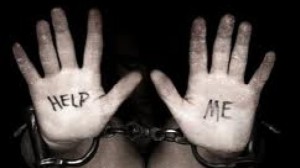
 Human trafficking in Africa is thriving with help from a large network of traffickers, pimps, money-launderers, document forgers, and others who are willing to take part in the sale of human beings.
Human trafficking is tied with arms dealing as the second-largest criminal enterprise in the world, after drug dealing, according to the U.S. Department of Health and Human Services.
Migrant workers entering South Africa in the hope of finding work are easy targets for human traffickers. Thousands of girls and women are trafficked from Nigeria to Ouagadougou on the promise of decent jobs in Europe or the United States, only to learn they have been sold into prostitution.
In Somalia, traffickers get around authorities by throwing their human cargo into the water when the authorities give chase. It’s a modern day tragedy that seems to fly under the radar of the world at large.
In 2012, law enforcement authorities planned and carried out a large-scale operation to combat human trafficking in Africa. The pan-European operation included authorities in nine European countries with a goal of uncovering Nigerian criminal networks that operate all across the continent. Investigations uncovered 468 trafficking victims from West Africa, mostly women.
That was only a drop in the bucket. Investigations revealed a large international network that worked to transport victims from their home countries into Europe to slave away in brothels.
Modern Slavery
Let’s call human trafficking by its rightful name – slavery. It thrives in the shadows because it is big business. It will continue to thrive until we shine a light on it and on all who participate in it.
“It ought to concern every person, because it is a debasement of our common humanity. It ought to concern every community, because it tears at our social fabric. It ought to concern every business, because it distorts markets. It ought to concern every nation, because it endangers public health and fuels violence and organized crime. I’m talking about the injustice, the outrage, of human trafficking, which must be called by its true name – modern slavery.” –U.S. President Barack Obama
What You Can Do to Combat Human Trafficking in Africa?
Child sponsorship charities work to champion children’s rights and to help prevent human trafficking through education. When you sponsor a child, your generous donation is pooled with that of other donors so that entire communities can benefit from education and vital community services.
You’ve got to start small to make a big difference. When children receive education, when families are able to fend for themselves, when communities come together to help their own, the result is empowerment – for this generation and for the next.
Education affords opportunity. When you support child sponsorship in Africa, you are on the front lines of a movement to help people provide for themselves and their families. You are helping to spread the word about human trafficking. No one should have to should have to put their life on the line to put food on the table.

Leave a Comment or Question