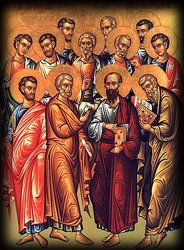
When leaders of the early church gathered in 397 AD to select which books should be included in the Bible, one of the things they were trying to do was provide themselves and following generations with an accurate and authoritative collection of books by which we could know the truth of God.
Ironically, they may have ended up doing exactly the opposite.
One of the criteria they used to select which books to include in the Bible is inerrancy. That is, does the book under consideration contain factual or theological errors? If they felt it did, they rejected it.
This practice raises some interesting issues with inerrancy. Let’s look at these below.
What is a Theological Error?
The first issue is how the early church decided what constituted an error. Prior to this time, they did not have an officially recognized or approved list of New Testament books to compare with. All they had were the Hebrew Scriptures of the Old Testament, and their own ideas about what was “correct theology.”
I am fine with them comparing the potential New Testament books with the Old Testament. But so much changed with the incarnation of Jesus, I am not sure how helpful this might have been, except in the area of the fulfillment of prophecy.
It is the practice of comparing the potential New Testament books with their understanding of “correct theology” that concerns me. There were many theological ideas within the early church that I do not agree with, especially at this time in the history of the church (as I discuss further below). So these early church leaders were choose books based on their ideas of what constituted correct theology, and I am not sure they were correct in their theology, which raises serious questions about the books they chose.
The Choices were Partly Determined by Power and Politics
Although Christianity became “legal” in 312 AD with the conversion of Emperor Constantine, it became the official religion of the Roman Empire in 391 AD under Emperor Theodosius I. The Council of Carthage, during which they selected the 27 books of the New Testament, took place in 397 AD.
I have to wonder if the Emperor was behind this selection of books, and what his motivation might have been for this selection? During the previous 70 years, the debate between Athanasius and Arius over the deity of Jesus almost tore the Empire apart. In 325 AD, Emperor Constantine had intervened between the two warring factions and helped craft the Nicene Creed. This did not solve all the problems, and every subsequent Emperor tried to deal with this issue to bring peace to the Empire.
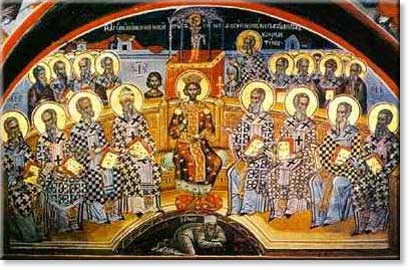
At one point, Athanasius attempted to limit the books of the Bible which could be used in the debate. He came up with a list of books which he thought were divinely inspired, and tried to get his opponents to limit their appeals to Scripture from these books. They refused, of course, since the only reason Athanasius had chosen these books was because they did not contain any texts which seemed to contradict the view of Athanasius.
Eventually, it was decided that to help avoid future debates, it would be best to compile a list of “accepted and approved” books which were deemed to be the divinely inspired Word of God. All those not chosen were declared inferior.
To combat heresy, they needed to determine which writings were credible and accurate, and which ones were not. They developed a series of tests by which to choose which letters and gospels should be deemed “from God.” By doing this, the church created a set of “trump cards” by which to silence those who were deemed heretics.
And of course, only those church leaders who agreed with the theology of the Emperor were invited to the Council to make this decision. It was not a council which had the full representation of all the various Christian groups within the Empire. It was a select group of leaders who all agreed to compile a list of approved books which would support the approved theology of the Roman Empire.
I find this practice very troubling. But there is one other issue that troubles me as well.
Is Inerrancy Really that Miraculous?
Pastors and scholars like to say that the inerrancy of Scripture is a divine miracle. We are told that it is a divine miracle for so many authors from so many backgrounds to write about so many topics and do so without contradiction or error. But is this really a miracle?
To use my illustration from yesterday, if you drove by a parking lot full of blue cars, you would not assume that this was the result of a divine miracle. Instead, you would assume that somebody gathered these blue cars there for a particular reason, and kept out cars of any other color.
A similar thing happened with the New Testament. If the early church leaders only allowed in books which did not contain any contradictions or errors with the rest of Scripture, or among the new books themselves, that is not much of a miracle; it is simply wise selection.
Conclusion
In the end, while I understand the motivation and the need for the decision to select which books to include in the New Testament, and to be honest, I think I actually agree with the decisions they made, and believe that to some degree, God guided their choices, the whole process really seems to raise questions about the doctrine of the Inerrancy of Scripture.
What do you think? Do you have a way which the books of the New Testament could be chosen, but which deals with the issues I have raised above so that we can maintain the traditional doctrine of inerrancy?

I am under the impression that it tooks YEARS to agree on the books because it has to be a quorum…they had to be unanimous–I’m also under the impression that Constantine was a Christian in name only..but that’s a separate issue entirely
Anthony,
You may be correct on both of these points. Have you read much about either point anywhere?
Yes, they’re in Frank Viola’s book “Reimagining Church”, but that wasn’t the first place I read it. He lists references, so I’ll get the book and find the refs.
Comment on the last three posts:
From your last post: “So in other words, God inspired both the accurate writing of Scripture, as well as the accurate selection of which books to include within Scripture….Once you have allowed God to guide the selection process of Scripture, then there is (no) reason to restrict Him from also guiding the copying of Scripture, the translation of Scripture, and even the teaching and preaching of Scripture.”
I understand that many people believe “God inspired the accurate writing of Scripture”, and feel that the Scripture claims this for itself. However….I think it is a huge, unprovable assumption that God directly guided which writings would be included in the canon.
As you have indicated in this post, and as any astute student of church history would note, there seems to be ample evidence that political and other considerations both by church leaders and heads of state (who were often the same people, and who were often hand picked) played a major role in selecting which writings would be included, as well as which would be excluded.
Once we make the assumption that God guided in the selection of writings that would be included in the canon, then indeed we may as well assume that God guided in copying, translation, interpretation, teaching and preaching of Scripture. However, we are also aware of many errors in all of those areas. So then why would we think that the selection process was without error?
Perhaps the larger question would be “Why do we need to believe that process was without error? (My answer – So we can lead the faithful to believe that the copying, translation and the church’s interpretation, teaching and preaching of Scripture is correct, what God is saying. That places so much authority, power and opportunity for abuse in the hands of the church, as history has shown and continues to show time and time again.)
The legalization and adoption of Christianity, in my opinion, goes against what Jesus taught, so I have heavy mistrust of the canonization process. Government sanctions and backing place the Church squarely under the control of the government. Christ taught that his church is not of this world.
To clarify, consider this: our churches now enjoy tax exempt status under government law. But in order to maintain that, you have to follow certain rules. Christ taught that our world system has been corrupted and mankind is in slavery to it. Exposing the hypocrisy, lies and deception used by our governments and institutions would not be allowed under any rulership. It would be deemed anarchist and the teachers would be silenced and discredited as nutjobs. It’s happened in the past.
If I may cut in, you may enjoy both Pagan Christianity by Frank Viola and “The Pastor has no Clothes” by Jon Zens. The last book basically tears the modern office of pastor apart.
Anthony,
Both great books. I saw your post about Israel and you are right, I could find nothing in the news about it. What is going on?
From what I heard, the Israelis were bombing the Dome of the Rock on the Temple Mount.
Steve,
Interesting connection with out modern connection to the government. I hadn’t thought of that connection before.
The argument about inerrancy creates far too many unnecessary arguments. I think if we simply accepted that this was the best they could do at the time, then we could focus on more important things like feeding the poor and supporting orphans. When the Bible is used to box people in we create all kinds of set backs that the Church just doesn’t need. If we weren’t so busy arguing about the Bible, we would have more time to spend loving on people.
So true. I still accept inerrancy, but completely agree with you. It is not necessarily an idea worth arguing over, especially if it gets in the way of loving others.