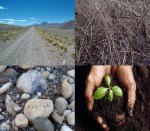
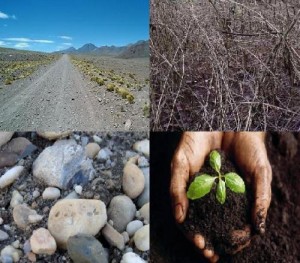
 I’ve been mulling over the Parables of the Four Soils for several years.
When I stopped pastoring a church in 2006, I was preaching through Luke and had made it as far as Luke 8:3. I did preach a sermon on Luke 8:9-10, but I never did preach on Luke 8:4-15, the Parable of the Four Soils. I was a bit relieved, because at the time, I had no idea what this parable meant.
And the scary thing, Jesus says that the Parable of the Four Soils key to understanding the other parables (Luke 8:10).
But as I have thought more and more about it, the meaning has slowly emerged.
The Parable of the Four Soils as Traditionally Taught
I firmly believe that the Parable of the Four Soils has nothing to do with determining who is a Christian and who is not. This is the way most people read this parable. They see that word “saved” in Luke 8:12 and think that it is referring to how to determine who has eternal life. Since only the fourth soil produces an abundant harvest, some people think that only the fourth, fruitful soil represents a Christian.
An alternative view, held by some who are a bit more gracious, is that the final three soils represent Christians because they at least have life. At least they sprouted and grew a little bit.
However, I don’t hold to either one of these positions.
The Parable of the Four Soils Reconsidered
If you have read my blog for a while, you may know that I always invite people to try to define the word “saved” in the Bible within the surrounding context of where it is used. Why?
Because although most Christians think “saved” means “get forgiveness of sins and receive eternal life so you can escape hell and go to heaven when you die” (or something like that), the truth is that the vast majority (99% or more) of the times the word “saved” is used in the Bible, it has almost nothing to do with such an idea.
Most often (nearly always), the word “saved” in Scripture refers to being delivered from some sort of temporal problem or calamity. Things like physical sickness or death, enemies, drowning, financial ruin, slavery to sin, etc.
And THAT is what the Parable of the Four Soils is about. The Parable of the Four Soils is about the four basic responses people have when they hear what the Bible has to say about how to be delivered from whatever problem is in their life (Luke 8:11).
The Context of the Parable of the Four Soils
The context of the Parable of the Four Soils makes this abundantly clear.
Jesus doesn’t just want hearing; He wants obeying (Luke 8:16-21), just as He gets from the wind and the waves (Luke 8:22-25), demons (Luke 8:26-39), and a Jewish leader and a sick woman (Luke 8:40-56). Jesus then sends out the twelve to see how they will do at hearing and obeying, and also to give them some experience at seeing how others respond to the Word (Luke 9:1-6).
The bottom line point of the Parable of the Four Soils is this: Whenever the Word of God is proclaimed, to whomever it is proclaimed, there will be four basic responses. How do you typically respond?
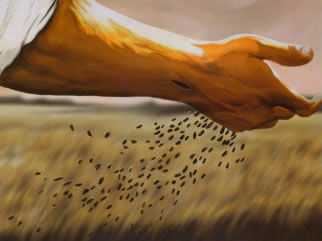
The Parable of the Four Soils goes on to describe the types of things that get in the way of us hearing God’s Word and obeying it. Sometimes, the devil gets in the way, and simply keeps us from hearing and understanding the Word of God (Luke 8:12).
Other times, it is sin and temptation that stifles our growth. We initially hear the Word and believe it, but after a while, we return to our old patterns of sin, and the Word of God fails to take root in our lives (Luke 8:13).
Then there are the times that we truly want to follow God’s instructions in the Bible, but the cares and business of life just get in the way. These things aren’t bad things, they are broken dishwashers, family vacations, bills that need to get paid, and flowers that need to get planted (Luke 8:14).
Ideally, ultimately, we want God’s Word to take root in our lives and product fruit (Luke 8:15).
Looking at the Parable of the Four Soils this way, we can see that any Christian can fall into any of the four categories at any time. In fact, since Scripture contains so many truths about various aspects of life, a single Christian can have all four types of soil in their life at one time! There are some areas in our life where we simply ignore everything the Bible says. Then there are areas where we initially obey the Bible, but then fall back into old sinful patterns. Then there are areas where we want to obey, but life gets in the way. And then there are areas where we are successful and fruitful in following Jesus.
The life of following Jesus then, is to make more and more of our life into the good soil. This is what discipleship is all about.
The Parable of the Four Soils Applied
Ideally, if we are good planters for the Kingdom of God, we want to be planting seeds in the best soil. It is this soil that gives a 3000%, 6000%, or 10,000% return on your investment.
If you look in the average church, we think that the good soil is the rich, powerful, pretty people. You know, those with seminary degrees, big smiles, and nice suits. Is that what good soil looks like?
I don’t think so.
So what makes good soil? When I was young, my mom had some flower gardens, and every spring, she would go down to the lawn and garden store, and buy bags of “Manure” to put in her gardens. One year I asked her, “Mom, what is manure?” She said, “It’s cow poop.” What made mom’s garden grow? Poop.
What makes good soil? Good soil is that which has a lot of nutrients in it. Good soil is that which has a lot of fertilizer. Excuse me for putting it this way, but I am convinced that the good soil people are those who have a lot of sh!t in their lives. Which people are these? The people we would normally think of as “bad people.” The sinners.
And yet in most of our churches, we work hardest to keep these people out. Of course, we’re all sinners, but we try to hide that fact from everyone else. We say “come as you are” but the super fine print says “only when you can act like us, talk like us, and look like us.”
But when we look at Jesus, who did He pick to work with, minister to, and pour His life into? Tax collectors, sinners, thieves, murderers, prostitutes, drunkards. Why? He knew a good investment when He saw one. In bad people, Jesus saw fields upon fields of rich, fertile soil just waiting to be planted. Bad people make good soil.
So are you upset about a particular area of sin in your own life? This may be just the area in which Jesus is about to plant some seed! So watch out! The plants are about to sprout! And you thinking of trying to minister to a certain group of people? Before you do, consider how much sh!t is in their lives… If there is not a lot of fertilizer getting tossed around, you might have trouble finding good fertile ground in which to plant the seed of Scripture.
Have you ever heard this interpretation of the Parable of the Four Soils? If so, where? If not, how does it strike you? Weigh in below!

Jeremy,
This is good info as it challenges us all who say the word “disciple” in reference to ourselves but never obey what has been revealed to us. Even more so to those who think everyone is a disciple and live life only for themselves. I have one area in particular in my life that is a grey area and I’m slowly coming to the conclusion that it isn’t grey.
Grace and peace,
Jim
I beleive the four soils represent how spiritual we are. Or how receptive to Gods word.
Mark,
I agree with you about the receptivity to God’s Word.
Christians are short-changing themselves if they feel that this parable refers only to determining whether a person is saved or not. What Christian has not experienced all of the situations described in the parable. Hasn’t everyone experience some kind of persecution and shrunk back? Hasn’t every Christian had to struggle with the distractions of worldliness? Maybe we should begin to look at the four soils as a progression in the person’s life. Not necessarily linear, but areas that any Christian must struggle through in their walk with Christ.
Larry,
Thanks for the comment. I believe you are exactly right. The four soils can represent our reaction to any of life’s circumstances. Hopefully, as we Christians progress toward living more like Jesus, we live more and more like the fourth soil. Thanks for weighing in!
I believe that Mark 4:21 gives the “witness” as to which type of soil we have. That is what is hidden but to be disclosed. The fourth soil, which brings a multiplying of 30, 60 or 100 times is the life that allows Christ to live through them, as without Him, nothing can be accomplished. The multiplying refers to the spreading and growth of the seed.
Jeff Herr
I agree with Jeff Herr.
I have heard theory as to suggest that
the farmer was Jesus and that this parable is key to understanding Mark’s gospel. Jesus says it himself, “if you do not understand this, how will you understand the rest of my parables.” Saying that this was the key. Mark’s gospel is filled with irony, and I think that this was no different. this parable also falls completely in sink with Marks gospel. The first soil with the birds represents the demons that came and took Jesus’ good news. All throughout the first 6 chapters of mark, he is seen driving out demons and constant runins with them. Then the second soil represented Jesus’ disciples. from about chapter 6 through 10 or so, the disciple’s slowly digress in their understanding of Christ. Christ even named Peter which means rocky… connection with rocky soil? The third soil represents Jerusalem, who heard the message amongst all there worries of life, gave up on the good news. They did this by “choking” jesus. or sacraficing him. I believe the same greek word is used for both the choking thorns and the killing of Christ. These are from Mark 11-15. Now the final point goes like this. In order to take in this theory, we can’t think of it as a normal harvest. Back in those times, when farmers grew and harvested, their season was during the wet season, from about November to May. Now if a farmer had 3 bad years in a row, he would lay everything he had left on the following dry season, having all hope that a miracle rain would hit. The theory supports this by the parable talking about a “hot sun” and how a farmer would only let weeds grow in his fields in the dry off season. So what was Christ’s last last hoora? His reserection and his ascending into heaven. From chapters 16 on… This last fulfillment is what produced disciples and why his 100 fold of production leaves us followers here today chewing on what He said.
This is not my idea nor my new testment teacher’s, but he is the one that challenged us with it and I wanted to know what other believers thought of it. The fact that Mark uses it to line out his gospel and Jesus’ ministry I think is really cool, but somehow it almost streches it a little to far.
The four soils represent condition of hearts..
Jesus clearly says that only the good soil bears fruits.. The rest are cast into hell..
The good soil bears much fruit not because They are bad people or as you claim Jesus perceived them as a good investment..
Thee good soil represents someone who;
* admits and understands that they are indebted to God because of their sinful nature
* that sin equals eternal damnation hellfire
* they turn to Jesus as our own saviour to abide in his covenant to fully repent of sins and become holy enduring right to the end
* remember Jesus said you cannot serve the world and God, or money and god you cannot be a master to both
* the path to eternal life is very narrow and strait and only few are able to find it you have to let go of your desires and dictates of the flesh and always embrace and find happiness serving god set your eyes on Jesus…crucify your desires.. Selfish ambition, covetousness, any sin
Jesus bless you
*
Chris,
Though only the fourth soil bears fruit, all but the first sprout up and grow. That is, they have life. Furthermore, the text doesn’t mention hell anywhere, you are reading that into the text…
Love it! Thank you!
Jesus Himself called this the Parable of the Sower. He did not refer to it as the Parable of the Four Soils.
Focusing on the different types of ground puts the focus on man, instead of on the Lord, where it ought to be. Man is not the subject of the Parable; the Lord is.
The Seed goes out exactly where the Sower wishes it to go. To focus on the kind of ground the seed goes into is to hint that the Lord might not know what He is doing, wasting seed on the three quarters of the ground which are unprofitable.
In this interaction it is the seed which is the important thing, not the earth it goes into. At the Harvest it is the plant, the fruit that the seed has grown into that will be harvested—the earth in which it was grown is nothing.
When a seed goes into the earth, it breaks open and absorbs nutrients from the soil. Those nutrients go into the growing plant and make it what it will eventually become by the time of the Harvest. Only those good things that are given to the plant will be harvested with it.
It is like the old poem:
“Just one life; soon ’tis past.
Just what’s done for Christ will last.”
The four earths are four types of Christians, or “Christians,” might be a better way of putting it.
[1] Christians who show up at Christmas or Easter. The message goes in one ear and out the other. They are Christians in name only. Perhaps their family was Christian, or they are Christian because America is, supposedly, a Christian country.
[2] Ninety-Day Wonders as they used to call them. These are Christians of whom it may be said, “When the going gets tough, the tough get going—the other way.”
[3] Followers of the “Prosperity Gospel.”
[4] True Christians, in whom the Seed reaches optimum growth, some a hundred-fold, some sixty, some thirty. And in truth, some in the first three categories mutate into the final categorey, for miracles have been know to happen.
Finally, to call the earth the seed is scattered upon, “soil,” suggests “soiled,” that is, dirty and filthy. “Earth” and “ground” and “rock” are the only words Jesus uses for the Parable. We should choose no other.
I agree with the that the conditions of the heart in which represents the soil or the receiving of the word of GOD is important. The condition of the soil (a person’s heart) must be carefully considered before planting the seed. The Word of God also commands us this
Matthew7:6 Give not that which is holy unto the dogs, neither cast ye your pearls before swine, lest they trample them under their feet, and turn again and rend you. Meaning give not that which is precious to someone who doesn’t have it in there mind or heart to change. GOD’S word is too precious to give away to someone who doesn’t want to change.
In Matthew 13: 1-9, Jesus tells the parable of the sower. This is immediately followed by His disciples asking him why he essentially speaks in code (aka “parables”). Jesus very clearly unpacks his motive: parables help to filter out those who hear and then want to hear more because their mind/heart have latched on FROM those who don’t . That’s Jesus’s point of parables in general. Then without stepping off topic, he ELABORATES on this filtering concept by specifically unpacking the Parable of the Sower to make concrete his point: that parables are intentionally not literal because they more effectively filter out the 4 categories of the human heart to ANY truth Jesus is teaching (be it on salvation or anything else. NOT just salvation.) The soils are people’s responses to hearing. Hearing what? V. 11 “mysteries of the kingdom of heaven” and in verse 19 “the word of the kingdom”. NOT just salvation. Leading up to chapter 13 of Matthew, Jesus is preaching left and right and in his audience are these 4 different types of soils regarding all of his teaching, NOT just his teaching on salvation. Limiting it to salvation actually takes the parable out of context because looking at what was happening BEFORE Matthew 13, you see Jesus preaching on a variety of topics. But people’s responses varied. This was the case then. It’s the case now.
Some hear how God Incarnate is speaking to them, but they’re so hard hearted, they don’t receive anything Jesus has to say to them. (This can be about salvation. BUT it can ALSO be about any other truth God is speaking into their life. It can be about how they’re treating their neighbor. How they’re running their business. If they’re being unforgiving. Whatever.)
Whatever Jesus is saying to them, they just don’t want to hear it. So, the enemy takes it away. This person can be a Christian or an unbeliever. In either scenario, this person hears from God but does not understand it. To them, whatever the particular truth God is revealing to them is absurd so it doesn’t penetrate. It just sits on the surface of their mind/heart completely not affecting them.
This is not exclusive to an unbeliever. How many times has God spoken to a Christian but the Christian has still chosen to walk in rebellion? That’s this type of soil. Hard heartedness about something and so there is no growth in that area.
The next type of person (the second soil: shallow, rocky ground) hears a message, a sermon, reads a book, reads Scripture and something POPS out to them and they get super excited but where there is no depth, there is no longevity. When they actually have to walk the walk on this topic, they shrink back. Jesus specifically says “when persecution arises because of the word, immediately he stumbles” in Matthew 13: 21. In this scenario, this is clearly a Christian who is unwilling to go counter culture because culture is persecuting them for their beliefs. So, because this person is not deeply rooted, they’re scared. They stumble. They would rather just not engage in the things that bring persecution so they back off. They are not lost. They have not fallen. They are someone who just will not grow deep and bear fruit as God has intended for them to be. What they were once excited about, they discover is brining them persecution (as walking the walk is supposed to). They back off. They don’t grow. Their roots remain shallow.
In the third scenario (thorny soil), this is the Christian that doesn’t have a depth problem (as in the previous situation) they have a “divided attention” problem. They got their eye on Jesus AND the world. Like Peter on the water…they want to walk to Jesus and can BUT when they pay MORE attention to what’s around them ( the cares of the world…the pursuit of riches….) they get choked out by these very things that have taken priority over their time, talents and treasures.
This Christian struggles to walk in triumph and victory. How can they when their heart and mind are equally split? (Remember that Jesus had exhorted in Chapter 6 to “seek FIRST the kingdom of God and all these things will be given to you”. Put God first. Everything else falls into its proper place. But put the world first…and you will get inundated. Anxiety? Can’t breathe ? Feeling the crushing weight of the world? That’s what happens when the world “chokes the word” v 22).
Finally there’s the Christian who hears the word and understands it. How do you understand God? The Bible is replete with information on how to do this: pray, ask the Holy Spirit to teach you, then spend time studying Scripture. There are blessings in this pursuit. Pressing in to know God and his heart will never yield unproductive time or effort. This fourth soil type of person is soft and tender toward God, they’re coachable. Their soil does indeed receive the word, the word then grows in them doing the work it was intended to do which is to conform them to the image of Jesus Christ more and more.
Jesus says in verse 23 that this person “indeed bears fruit and produces”.
So, when God is speaking to you: will you be hard hearted and allow the enemy to snatch away the goodness of the message that God intended for you?
Or will you only listen and receive for as long as you don’t have to stand by it or defend it?
Or will you stand by and defend BUT also juggle the world more and more so that you are choked?
Or will you yield, surrender, and like soft soil receive the word so that it grows in you and bears fruit in quantities you never imagined?
No one is only one type of soil all the time. We all have been all these types of soils regarding different areas of our life that God is speaking into. Being like the fourth soil in as many areas of your life as possible is what we ought to strive for.
Producing fruit is part of being a Christian, correct? If someone is not producing fruit, wouldn’t that be a sign they are not a Christian?
Yes there is a verse that says you will know them by their fruit. Also don’t the first three plants die? You say they were alive initially but the first seeds never got into the soil; the second seeds fell on rocky soil so they didn’t have deep roots and got scorched and withered; the third seeds fell among thorns and were choked out. I have done enough gardening to know if you don’t start with good and sufficient soil, your plants will not survive. It’s difficult to grow from an already established plant and even more so from seeds. The ground has to be tilled first and all rocks and thorns removed.
Spot on. Clearly the minority position but majority never was a good indicator of accuracy. I agree with your assessment, as most likely Dr. Ken Wilson would also.