Many church leaders want doctrinal statements, membership classes, sound teaching, and seminary degrees as a way to shield their church from false teaching.
 But as church history and personal experience reveal, no church can completely guard the minds and hearts of the people who attend that church from different theology and dangerous ideas. To the contrary, it seems that the more a church tries to completely control what people hear, read, and think, the more cultish they become. And one of the defining characteristics of cults is that they are full of false teaching.
So in other words, the more you try to protect against false teaching, the more likely you are to fall into it.
This doesn’t mean we should’t teach, warn, and seek to protect, but we must recognize Whose job it is to protect the minds and hearts of other believers.
The Holy Spirit Guides Us into Truth
Just as judging others is an attempt to do the job of Jesus, so also, trying to protect the minds and thoughts of others is trying to do the work of the Holy Spirit. We can and should teach, warn, admonish, correct, and even instruct, but only from the position that we ourselves can be taught, warned, admonished, corrected, and instructed.
Nobody is 100% correct in our thinking and theology, which to some degree, makes all of us “false teachers.” And if God can use the pagan king Cyrus to rescue the Jews, and Balaam’s Ass to correct a prophet, then we must not put it past God to use an Atheist, a Muslim, or someone we consider a heretic to correct us. I think the only time we should ever seek to teach or correct someone else is when we are actively looking for ways that they can teach and correct us.
Human Attempts at Protection Often Keep Out the Holy Spirit
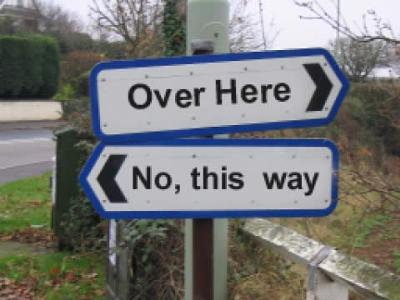 Doctrinal statements do not always keep false teaching out. To the contrary, such forms of protection usually keep God’s corrective voice out. The creation of human boundaries and borders reveal a heart which says, “I have 100% truth, and don’t need to be taught by anyone. If you disagree with me, you are wrong, and I don’t want to hear from you until you repent of your ways and see things from my perspective.”
This is a very dangerous and unspiritual way of living. It is not a way that leaves room for the Holy Spirit to speak into our lives through anyone He so chooses. It insulates us from His corrective voice so that we can continue to live and believe falsely.
So before we say we need doctrinal statements and membership classes to protect ourselves from false teachers, we must remember that in some way or another, we ourselves are false teachers, and need to hear the corrective voice when it comes, however it comes, and through whomever it comes.

Wow Jeremy! Fabulous! Now I am really convicted! you are such a talented writer! Thanks for helping the rest of us see the “other side.” job well done!
Thank you. You are very generous.
Very good points. The last church I came out of fits this description. And if not corrected, it will get worse. I remember the day I resigned from leadership and the church, the pastor told me if I left, I would be deceived. There are some there now who know things are bad, but they are afraid to leave because they have been told if they do, they will get divorced. When we try to control people, even if the motives are initially good, it is witchcraft.
Churches that try to do this eventually have to resort to two aspects of the human nature: the abusive person’s desire for power; the abusive victim’s fear of doing it wrong…those who are neither of these will eventually leave…
Katherine,
That is a very good analysis of what goes on behind the scenes in these situations.
These are points I too have thought for some time. Well said!
Now that there are two Sams on here, I’ll start my comments with “The original Sam”.
Another great post, Jeremy.
All of my life I’ve heard the doctrinal discussions. Who is right? Who is wrong? Who is a false teacher?
Jesus seems to think that if we believe Him, we will do what He says. Some like to argue theology endlessly and find heresy and false teachers under every rock. Others just try to live as Jesus said and did. I cannot remember a single person that I have ever known who fell into both groups.
We’re all imperfect and undoubtedly none of us have everything completely correct. But we can try to follow Jesus, imperfectly though it may be, loving Jesus and other people and treating both with love and kindness. Doctrine has its place, but it is not something with which to bash others over the head because we think our doctrine is somehow better than theirs.
🙂 Reminds me of another favorite C S Lewis quote:
“It is Christ Himself, not the Bible, who is the true word of God. The Bible, read in the right spirit and with the guidance of good teachers, will bring us to Him. We must not use the Bible as a sort of encyclopedia out of which texts can be taken for use as weapons.”
– C. S. Lewis
The original Sam says: Great quote, Katherine.
Katherine and The Original Sam,
Great input. Yes, as important as theology and doctrine is, it cannot be used to beat someone over the head.
I love that Lewis quote too.
Kathrine, exactly, I’m in a very similar position, I did write a long spieel but deleated it just in case it may have been read by the wrong people. Whitchcraft it is. It’s good to know I’m not on my own as you can start believing your wrong and they are right. Clive
Did you find the writing of the spiel helpful? Somewhat cathartic?
It is a fine line that every church needs to consider, the pastor cannot control everything but most of them are probably tempted.
Rick,
Very true. Pastors are leaders, but we need to lead like Jesus… not like a military general. There is a difference between leadership and domination.
Excellent, Jeremy! Thank you for this post.