 The main problem in proving the resurrection of Jesus happened is in how to prove an historical event.
How would you prove, for example, what you had for breakfast this morning? It cannot easily be done, except through witnesses (who can lie or be mistaken) and documents (which can be forged).
But with the resurrection of Jesus, while we have witnesses and the documents they wrote, it is not so much what they say that convinces us of the historical fact of the resurrection, but the simple fact that such witnesses and documents actually exist which provides the greatest evidence for the resurrection.
Initially, this argument seems to make no sense. Just because someone writes a story about seeing a purple-polka-dotted elephant doesn’t mean that they actually saw one.
Precisely.
Many people claim that the early church invented stories about the resurrection of Jesus in order to support their new belief system and practices.
But that is exactly the point.
Stories about the Resurrection of Jesus Help Prove the Resurrection of Jesus
Prior to the resurrection of Jesus, no Jewish person believed that the Messiah would die and rise from the dead. But beyond this, nobody except Jewish people believed that people rose from the dead, and even among Jews, they believed the resurrection would happen all at once, at the end of time, for all Jewish people.
While there are “pagan” stories of resurrection, they are always stories about deities rising from the dead, not human beings. Everybody knew that when people died, they stayed dead.
And while there are occasional stories within Judaism of someone actually rising from the dead, these people still died later, and are awaiting the final resurrection to this very day.
So nobody believed that the Messiah would die, and therefore, nobody believed that He would rise. To talk about such things was almost exactly like telling a story about a purple-polka-dotted elephant. Talk about a dying and rising Messiah was just as ludicrous to a first-century audience as talking about a purple-polka-dotted elephant.
Which means that if the early church wanted to gain credibility as a movement, they never would have invented stories about a dying and rising Messiah.
If the church really wanted to gain credibility among the Jews, the Greeks, and the Romans for its new beliefs and practices, the last thing they would do is invent stories that sounded to everyone like fairy tales.
We cannot and must not say that the early church invented these stories about the resurrection of Jesus the Messiah in order to support and defend their new religion. Doing so would be like me telling you about a purple-polka-dotted elephant appearing in the sky as a way to prove to you that I had French Toast and coffee for breakfast this morning. Such a story might be creative, but hardly believable.
If you want people to believe what you say, you do not begin by creating outlandish tales which everyone knows to be false.
Yet this is exactly what the early church seems to have done if we say that they invented the stories about Jesus.
If the church had invented stories about Jesus rising from the dead, their message would have been doomed from the start.
Nobody Would have Invented Stories about the Resurrection of Jesus
Therefore, the only other reason for them to write about the death and resurrection of Jesus is because they believed it was true. If they had really wanted to “invent” stories which declared Jesus as the Messiah, the stories about Jesus dying on the cross and rising from the dead are not the stories they would have invented.
Does this prove that the resurrection of Jesus actually happened? Not exactly. But it does prove that the early Christians who wrote about the resurrection of Jesus did not invent these stories. If the church was inventing stories about Jesus, death and resurrection stories were not the sorts of stories they would have invented.
In his book, The Challenge of Jesus, NT Wright puts it this way:
The only way forward for us as historians is to grasp the nettle, recognizing that we are of course here at the borders of language, of philosophy, of history and of theology. We had better learn to take seriously the witness of the entire early church, that Jesus of Nazareth was raised bodily to a new sort of life, three days after his execution (p. 148).
So if you believe that the resurrection did not happen, but that the early church was wrong, you cannot simply say they invented the stories. Another explanation is required. Some have tried, but the explanations get more outlandish and illogical than simply believing in the resurrection of Jesus.
For more on this line of reasoning, read The Challenge of Jesus by NT Wright, or the more detailed explanation in Jesus and the Victory of God.
The cross of Jesus is CENTRAL to everything!
Transform your life and theology by focusing on the crucifixion and resurrection of Jesus:
Fill out the form below to receive several emails from me about the death and resurrection of Jesus.
(Note: If you are a member of RedeemingGod.com, login and then revisit this page to update your membership.)

The martyrs are the greatest testimony to the historicity of the resurrection. So many people wouldn’t have gone to the ends of the Earth and given their lives for a lie.
Yes, few people will die for something they do not believe in true. But of course, there are lots of people who die for things that they believe are true, but are probably not.
For example, I’m thinking of terrorists who die because they are told this is an instant entrance into paradise.
I don’t think the two are analagous, however. One might die for a philosophy or a cause. But they died for testifying to the reality of an historical event.It would be like my Dad dying because he wouldn’t deny the fact that he fought on a submarine in World War II.
I could be wrong however.
I see your point Dan, but to make martyrs be a proof of historicity you might want to specify the earliest martyrs, that is those who actually saw Jesus and perhaps those who heard about it from them.
As Jeremy points out, someone being willing to die for a cause does not simply prove it to be true, but only that those were willing to die for the cause believed it to be true. Then you have to ask “Did they have a good reason to believe it, or did they put too much faith into something they had a poor reason for?” Looking at a modern day martyr (or a 10th century martyr, or a 6th century martyr, ect.) their reasons for believing rely on what they have been taught by another, and that person from someone else, and so forth; so you just have to push it back, did the person who taught the martyr have good reason. All of these links in the chain may contain false information, intentional or through miscommunication, and everyone who believed after that would have very confidently believed in something that was actually false.
But in the earliest Christian martyrs, we lose the “I heard it from someone, who heard it from someone, who heard it from…” problem. We could throw the Bible out the window and still have plenty of solid, universally accepted, historical evidence of people who were willing to die for the cause they were teaching. Given that that is definite proof that they believed when you ask the question “Did they have a good reason to believe it?” The answer is “It was based on what they saw with their own eyes.”
At this point, you reach the ideas that Jeremy spent most of the post discussing, what makes the first Christians reliable testimony? A modern Muslim willing to die for his cause on the same ground as a modern Christian willing to die for his cause, they both are willing to die for something they genuinely believe in, but they believe it based on information they have received from others. The difference lies in the first Christians (who knew Christ as a man), who were willing to die testifying that He is risen in a fashion no Jew would ever predict, choose or hope for; the first Muslims followed the teachings of someone who taught that it was their nation’s destiny to take over the world by force so it was OK if they died along the way to accomplishing that. Which one of those is a “cause worth dying for” that a man would invent and which is a “cause worth dying for” that no one would be willing to die for unless they were certain it was true?
I would say that I agree with both yours and Jeremy’s reasoning, and further say that they both depend on each other to be true. Jeremy’s discussion on the stranger than fiction claims of the apostles could still be something cleverly invented by them, if Jesus simply died then a handful of people could have devised the testimony to his rising believing that it was for the greater good that people believe his teaching, but your pointing out that they were then willing to die for it shows not an invented story but a genuine believe from firsthand witness.
A point made a number of times in this video. https://answersingenesis.org/media/video/bible/authentic-christ/
Although I’m not sure I understand all your reasoning, Jeremy, you wrote an important blog here that generated some good discussion. I think we, as professing believers, can agree that those who follow the Lord Jesus should be in harmony with His thinking and the thinking of His followers, as revealed in the Greek and Hebrew scriptures.
For example, as stated in the post, first century Jews (following the Pharisee, not Sadducee, teaching) believed in a general resurrection in the life to come. Martha, responding to Jesus concerning her brother Lazarus’ resurrection, affirmed that she knew he would rise again on the last day (John 11:23-24). The suffering servant/Savior passage of Isaiah 53 does not explicitly teach His resurrection, but does speak of His bearing the sin of many and making intercession for the transgressors (Isa53:12).
Furthermore, the resurrected Lord Jesus does in fact affirm that it is written that Christ would suffer and rise from the dead (on) the third day (Luke 24:46), a declaration confirmed, at least, by Hosea 6:1-2, which tells of the Lord binding and reviving and raising up those He has smitten. Many of the Jews of the 1st century conceived of a victorious Messiah, no doubt an earthly figure in the religious/political realm, but they failed to connect that person with Isa. 53’s suffering intercessor.
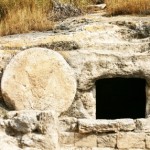
The tomb where the disciples had laid the Lord’s body found empty, along with the reports of His appearances after His burial, especially at His ascension, are eyewitness accounts and actual evidence for His resurrection given by His devout followers. They willingly suffered for their witness and passed on the gospel message to the next generation of believers who did the same. One would have to have a naturalistic or religious bias (atheistic belief that the dead don’t rise, or Muslim belief that God would rescue His servant, etc.) to deny the truth. The “honest”atheists would say the disciples were mistaken, not lying, in their affirming His resurrection, “honest”Muslims would say God rescued the real Jesus (by an ascension or other means) and had Judas, transformed to look like the Lord, crucified in His stead.
In place of a scripture- based argument, even combining the scriptural affirmations with the scenarios propagated by various stripes of unbelievers should paint an unmistakable picture of what happened. The good guys, now and then. proclaim(ed) the truth and willingly suffer(ed) for their witness. The bad guys, now and then, oppose(d) the truth and persecute(d) or oppress(ed) the good guys because they thought the good news they proclaimed was bad news (for them). In this way did the bad guys reveal their wickedness.