 How did the church go from no land or property at the resurrection of Jesus, to one of the wealthiest land-owners in the entire world today? As we have summarized previously here and here), a lot of it had to do with the rise to prominence from a persecuted religion in the Roman Empire, to the time when Emperor Theodosius declared Christianity the official religion of the Roman Empire in 380 AD.
In a culture where there was no distinction between religion and politics, such a declaration had far-reaching effects. People as far away as Germania (Germany) and Britannia (Great Britain), who knew next to nothing about Christianity, were told that the Empire was now Christian, and it would be prudent for them to convert.
Conversion of the Masses
But how does one convert when nothing is known about the religion you are converting to? The answer is simple: you change what you call yourself, but go on doing what you have always done. It was not like anybody around could tell you that you were doing it wrong. Priests of other religions continued to be priests, but they were now Christian priests. Pagan holidays continued to be practiced and observed, but they were adopted and adapted by Christianity, and given new meaning and interpretations that fit better with Christian theology and ideas.
Conversion of the Temples
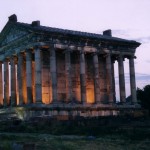
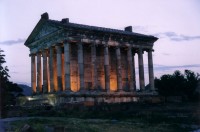
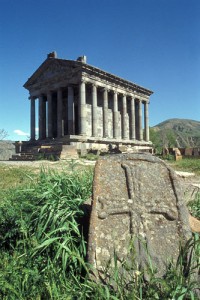 One of the most influential additions to Christianity was the mass inclusion of thousands of temples across the entire Roman Empire. Temples and shrines that used to be part of the Emperor cult now became Christian temples. However, other than who the prayers were said to, little else changed in these buildings as far as decorations and service structure. It was thought that destroying or abandoning them would be unwise and unproductive. Besides, the new religion of the Empire needed somewhere to teach and train all the new converts about their new faith.
There were, of course, numerous Christian voices that sounded the alarm about all the ideas and practices being adopted into Christianity by the ignorant masses. So several of these leaders developed an approved set of doctrines and teachings which should be taught to all the new “converts” in all the churches, and quickly developed a system to train and send out a small army of teachers and priests to distribute these empire-approved church doctrines.
The Development of a Defense
To defend and explain many of these developments, newly empowered church leaders quickly developed a theological defense for the priesthood, the hierarchy, the power, the money, and the buildings. The overall defense rested primarily on the idea that Kingdom of God was overtaking the kingdoms of the world, and the riches and power of the worldly kingdoms were being used to help expand the Kingdom of God.
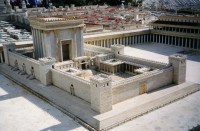 The defense of church buildings consisted largely of looking back to the Temple of the Jews in Jerusalem, and to the future rule and reign of Jesus Christ on earth. It was argued that since God allowed Solomon to build a grand and glorious temple where the Jews could worship Him, it was necessary for Christians to worship God in a similar fashion. Many in the church argued further that the conversion of the pagan temples brought the world one step closer the ultimate goal of spreading Christianity over the entire earth. Other pagan nations would become Christian nations, and pagan rulers would become Christian rulers, just as had happened to Rome.
Eventually, the entire world would become Christian, thus ushering in the return of Jesus and the eternal kingdom, when Jesus would return and rule the earth in peace and prosperity for all. The money and the power of the church, represented in large part by the buildings, were viewed as both the means and the signs that God’s Kingdom was advancing.
Has much changed today?

Loving the info.lots of thanx coming your way jeremy!
Followers of Messiah,scriptural.
christianity,western emperialistic ways to institutionilise the body of christ.
Christianity as a “religion” certainly has some imperialistic behaviors. This comes, I believe, from theology and ideas from the time of the Roman Empire. We might call it “Christendom” since the term “Christian” is used from time to time in Scripture.
Your take on this is similar to mine.
Obviously, some “Christians” don’t really grasp the significance of all this. Others remind me of the small child with his fingers in his ears who says “I’m not listening”. We inherited not only the concepts of a paid priesthood and buildings (temples) from Rome, but also a lot more, most of it something other than the teachings of the man from Galilee.
We assume that Rome wholeheartedly adopted Christianity and its beliefs. But did they? Or did they adapt and dress up their pagan religion and beliefs to make them appear Christian? How much of Rome is in modern Christianity and how much of Jesus?
Are we saying that the Christianity we grew up with is actually a syncretistic religion, containing elements of not only ancient Christianity, but also of Roman pagan worship, complete with temples(buildings) and paid employees (priests and others)? Perhaps we should throw in a dash of most every culture, including our own, in which Christianity has been an influence to complete the recipe.
Somehow Jesus gets lost in all the buildings, decorations, priest system, “theology of empire”, “theology of the privileged class” and all that Rome added to the basic command of Jesus to follow Him. Excuse me, did Jesus’ command to follow Him even get included in the formula?
Yes, I sometimes go back and forth. Did Christianity “redeem” these things so that they are no longer associated with paganism, OR did they corrupt Christianity so that it no longer reflects the values and mission of Jesus? I think I hold to some hodge-podge mixture of both ideas: Buildings and holidays and traditions can be redeemed, as long as they do not consume our values and mission. Of course, how often does this actually happen?
Hopefully some of the things picked up from pagan culture, such as buildings, can be redeemed and at the same time not consume our values and mission. I have read that is happening among some groups of believers.
In my personal experience in “churches” of which I have been a part, however, values and mission have been almost obliterated by the focus on money, property, staff, pandering to the whims of those who give the money, catering to those in power in the organization and so on. I found much more of Rome than of Jesus in all of those groups.
Our model is broken. Perhaps we can’t reinvent the wheel, but we can focus on Jesus and do what He tells us – Love God and neighbor.
So true! So true.
Thanks so much for this illuminating, insight into just one aspect of how traditional religion has drifted so far off base from the reality of being a disciple of Jesus. It’s a tragedy that many of the Lord’s people have no revelation of these things. May He call us out of religion and unto Him.
Thanks for the note. Your blog name is intriguing. I will come check it out.
Great Article!!!