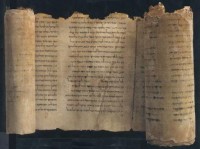
Have you ever wondered how we got the Bible that we have? One of the steps by which we got the Bible we have is called the canonization of Scripture.
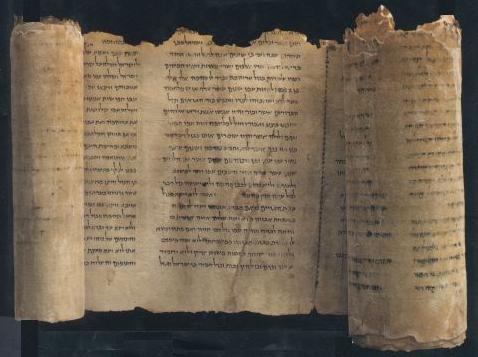
Did you ever hear that there were other books, letters, and documents that were written near the time the books of the Bible were written, claiming to be by authors like the Apostles Andrew, Thomas, Peter, and Paul, but which are not found in our Bible?
I own several of these other books and have read them. Many of these books are found in the New Testament Apocrypha
The reason these books were not included in the Bible is because of something called the Canonization of Scripture. No, we are not talking about putting the Bible in a cannon and shooting it at the walls of a city.

We will look below at the the need for Canonization, what it is, and how it was done.
The Need for the Canonization of Scripture
In the early church, many of these “other books” were floating around the churches, and contained ideas and teachings which caused problems in these churches. There were numerous controversies about what Christians should believe, how Christians should behave, and who gets to decide both.
So in an attempt to develop unity among all Christians, some of the authorities in the early church gathered together to decide which books should be included in the Bible, and which ones should not.
They developed what is called the “canon of Scripture.”
The Meaning of “Canon”
“Canon” means “rod” and refers to a measuring rod that was used by carpenters and builders. In relation to Scripture, it refers to the rules and standards by which the various letters and documents were measured to determine whether or not they should be accepted and recognized by the church.
How Scripture was Canonized
By about 200 AD, there was a list of about 20 New Testament books which were recognized by most church leaders as having the authority and accuracy of Scripture. Seven of the books which we have in our current New Testament which were debated by the early church are: Hebrews, James, 2 Peter, 2 John, 3 John, Jude, and Revelation.
The final list of our currently accepted 27 books was formalized in 397 AD at the Council of Carthage.
The Rules of Canonicity
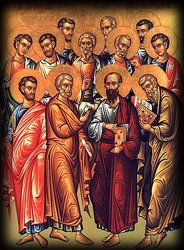 Curiously, it is difficult to determine which standards and methods the members of this Council used to decide which books to include in the New Testament. Though they left us a list of 27 books recognized as authoritative, they did not leave the list of criteria that they used to make this list.
Nevertheless, there are some hints in their writings, and most scholars today believe that some version of the following six criteria were used:
- Apostolic – The book must be written by an apostle, or a ministry partner of one.
- Orthodox – The book must agree with the the accepted and approved teachings of the church.
- Christocentric – The book must focus on the person and work of Jesus Christ, especially in relation to His redemptive work on the cross for the world.
- Inspiration – The book must have the qualities and characteristics of the divinely inspired Word of God.
- Testimony of the Holy Spirit – The church authorities felt the inner witness of the Holy Spirit in helping them select certain books.
- Acceptance by the Church – The book must already be widely accepted and used by the majority of churches.
As a result of this process, we ended up with the New Testament that we now read, study, and preach. And in case you are curious, the process described above only applies to the New Testament. The formation of the Old Testament was completely different, but I will not cover that here.
The Canon of the New Testament still faced challenges over the years. For example, Martin Luther wanted to remove the book of James from the Bible. Some today want to include some of the other books as it seems to them that there were arbitrary and political motivations for the selection of the books.
The above information is a summary of what I was taught in Bible college and Seminary. Tomorrow, I will begin to ask questions about it, and raise issues that I see. Until then, what do you think about this process? Did it need to be done? Was it done correctly? Where the six standards wise? Why or why not?
I don’t believe that all of the books were included that should have been and probably a couple that were included shouldn’t have been. Some of the letters of Paul don’t have verified authorship (i.e. they just say Paul wrote them without proof because it is tradition) Now does this mean the books are wrong? No. It just means that according to the “rules” during the Council of Nicea, they probably shouldn’t have even been included. Besides that, any book that didn’t agree with the Roman version of Christianity was thrown out, so as to unify Christianity.
Also, I don’t see any good reason the “book” of Jude is in the Bible.
Just my opinions though.
Kirk,
Very interesting. Which books would you include that were not?
That is a great point about books that did not agree with the theology of those who made the selections. I will be talking about that in a later post.
Here is an interesting article relevant to the last few weeks of posts.
http://www.foxnews.com/scitech/2011/08/12/bible-detectives-jerusalem-scholars-trace-bibles-evolution/?test=faces
Can’t wait to see what’s next!
This is a confusing issue to me. How does anyone ever hold to any particular view on this with any certainty? I look forward to reading your future posts on this.
I see canonization as a perplexing issue as well. One guideline I use is the fact that Judah had lost the Law, right in the Temple and hadn’t read or followed it for many many years. If God would allow that to happen among his people, I find it consider it probable that our canon is not perfect. The Catholic Bible was the only one allowed for over a thousand years, but the reformation changed that. Who’s to say what’s right? The book of Enoch was canonical for years until it was removed. I consider the progression of the church politics and history when making some choices, too. Something has been afoot and I don’t trust man. I go by what I see in the world around me.
Steve,
I never thought about the parallel between our situation and when Israel lost the law. Very interesting.
David,
Yes, the whole Canonization process is shrouded in mystery. Though we know much about the process, there is much we do not know, which makes it confusing, as you said.
If we don’t trust men, and so doubt the authenticity of the canonisation, we should at least trust God. I believe, if we had stick to the KJB many confusion would have been avoided. For example the author of Jude could have easily been the apostle mentioned in Luke 6:16, and Acts 1:13 as “Judas the brother of James” in the King James Bible. However, the mistranslators of the contemporary Bible translations translated it saying “Judas the son of James.” You see how these obfuscators of truth work through modern translation. They are the silent source of division, disunity, and confusion in the church today. Since I started studying the King James Bible, everything started coming to a clear light. I am writing a book on these issues that I hope to publish soon for FREE. I’ll try to post it here when I publish it. Brethren, I trust God and I don’t doubt his word at all, but let’s stick to the King James Bible.
I don’t get the KJV only school of thought. Why not just advocate the learning of Hebrew, Greek and Aramaic?
Both Good points and he’s right, the king James is very good and I’m taking Hebrew by the way so I have seen how accurate the translation is…
I only read aKJV bible, because that is the only one Apostolic Pentecostal Church’s read. But I know there are a lot of things missing from all English written bibles. The only true ones are written in Greek and Hebrew. I don’t know the languages but I think everyone should learn them to find out the REAL TRUTH!!!
Very good article. Simple and easy to follow. One thing I have considered is that if the Word of God is inspired 2 Tim 3:16, then would not the canon of the Bible be carefully constructed by the same Holy Spirit that led to the writings in the first place? We must avoid the “I think” this or that book should or should not be in the Bible. Why would Kirk have an issue with Paul’s letters? His name is on all his letters except for the commonly believed letter to the Hebrews. Whether he thinks its by tradition or not, the Greek transcripts say other wise. http://biblehub.com/greek/strongs_3972.htm – The Strongs 3972 is Paulos Παῦλος and is in the first verse of each letter he wrote. That was the common practice in those days, identifying yourself first instead of at the end of a letter like we do. So I disagree with Kirk on this. Kirk would need to really dig deep to prove Paul did not write those letters. As for the Apocrypha, one reason I do not believe they are canonized is that Jesus Christ never quoted or referenced them as well as the other Apostles. Those that try in vain to include these have to disregard the criteria set to canonize the Bible. I also believe that the statement “Besides that, any book that didn’t agree with the Roman version of Christianity was thrown out, so as to unify Christianity,” is incorrect because what is a Roman version of Christianity? Is he referring to the Roman Catholic church? If so, aren’t they the ones who wanted those books added? The word Catholic in those days is not the way we use it today, late Middle English (sense 2 of the adjective): from Old French catholique or late Latin catholicus, from Greek katholikos ‘universal’, from kata ‘with respect to’ + holos ‘whole’. – In the Niacin Creed, there is a line: We believe in one holy catholic and apostolic Church. This IS NOT the Catholic church as we refer to it today, but the universal Church which Christ died for. I also think Kirk got the council’s mixed up. You pointed out that is was the Council of Carthage of 397 that gave us the Scriptures as we know it today, but the Council of Nicea dealt with the attacks upon the Trinity, especially from Arius, so I believe Kirk got them mixed up. I enjoyed your article very much, contend for the faith that was first delivered unto the saints brother.
Thanks for the encouragement about the article and the input. You are certainly thinking a lot about these things! Keep it up!
I’ve said this as well. If I have faith that God inspired writings why wouldn’t I believe that He would preserve His message. Proverbs says that it is the glory of God to hide a matter but a king will search it out. So even if there had been some tampering with the selection process He can be found!
Amen
>As for the Apocrypha, one reason I do not believe they are canonized is that Jesus Christ never quoted or referenced them as well as the other Apostles.
Wondering how much Jeremy would object, were I to post more than a thousand verses from the Anagignoskomena, citing the NT, and not the Anagignoskomena, as the source. I’ll red letter the text, using the appropriate OSIS markup. (This blog doesn’t allow users to play with fonts, and colours, and other shiny things.)
>what is a Roman version of Christianity?
That is one of the ways to refer to Catholic Christianity, which is one of the branches of Christanity. Other branches are Orthodox Christianity, Oriental Christianity, Confessional Christianity, and Reformed Christianity. I’ve omitted a bunch of others, simply becuase I don’t feel write an on the history of Early Christianity.
For msot of a millenium, Catholic Christianity held all the power, in Europe. Outside of Europe, it was more or less insignificant, precisely because, by comparison, it lacked both adherents, and clergy, both within and without Europe.
Today, most people on study the history of Catholic Christianity, because, being the political power, it survived. (There are a couple of passages in the NT that imply that where Christianity does not hold political power, it does not survive, but where it does survive, it no longer adheres to the teachings of Jesus.)
Where in The Bible, does it specifically say that Genesis to Revelation and every book in between is the literal, inherent, factual, and flawless Word of God? Regarding the 2 Tim verse: “All scripture is inspired by God and profitable for teaching, for reproof, for correction, for training in righteousness”, the Greek definition of the word ‘scripture’ is ‘writing(s)’. The word would be used to describe everything from a personal note (written and passed to another), a receipt of an item purchased, a person’s will after death etc. So the verse more accurately reads: “All ‘writings’ are inspired by God. . “. But even if all of that is a complete fabrication; why do Christians cling to one verse in ONE of the 66 books of the Bible and act as if it were a Divine stamp that all of it is God’s word? How do you know the writer wasn’t speaking of the book he was writing or reflecting on older writings, but not the completed copy we have today? PLUS: 2 Tim 3:16, says that it is “inspired” by God. NOT the “literal word of God”. There is a difference.
You raise some good points, Joshua. I discuss some of these things more in other blog posts on the inspiration and inerrancy of Scripture. You can search for them by using the “Search” section down in the website footer area.
if were only going to use the KJV why stop at greek, or latin why not only read the original texts which were written in Coptic the simple fact is not a single one of us , including our highest religious leaders, other then about 30 ancient language spet in the world have ever read an original scripture. They are all translations and they are all flawed somewhere no matter how perfectly we attempted to translate and copy them they were copied by hand for 1500 years errors had to occur. Also there was a lot of politics in at the council
My question is simple: How do you know that the Bible (in any form) was divinely (or Holy Spirit) inspired; and not just a collection of ancient Jewish scripture and Christian Greek scriptures?
Isn’t faith what it’s about? We believe there is a God, we believe that Jesus lived (and have eternal proof). We believe in electricity even though we haven’t seen it but see the affects of if. I’ve never seen a “love” but I too know the results of it. Sometimes I guess we all need to reach out beyond what our physical senses tell us.
You mentioned that it was decided that 6 criteria must be met in order for a book to be in the Bible, canonized.
What about the 7the and 8th criteria?
(My point. Who said there should be only 6?)
I’m glad we don’t follow any of Martin Luthers thought process. Can you imagine, being saved by grace when the church has been teaching saved by works?
(My point. If we are willing to follow saved by grace alone , which I am wholeheartedly in agreement with, then why can’t I agree with Marty’s thinking on removing the book of James?)
I believe the book of James should be removed from the canon. Look at this from James 2:21-23: Was not Abraham our father justified by works when he offered up his son Isaac on the altar? 22 You see that faith was active along with his works, and faith was completed by his works; 23 and the Scripture was fulfilled that says, “Abraham believed God, and it was counted to him as righteousness.”
When the Scripture says Abraham believed God, and it was counted to him as righteousness it was not regarding the offering up of his son Isaac. Here is what the Scriptures actually record in Genesis 15:5–6: And he brought him outside and said, “Look toward heaven, and number the stars, if you are able to number them.” Then he said to him, “So shall your offspring be.” 6 And he believed the Lord, and he counted it to him as righteousness.
Abraham believed God that he and Sarah would give birth to a male child in their old age to carry on his lineage. God counted this belief and trust of Abraham as righteous, it had nothing to do offering up Issac on the alter who had not as yet even been born as James so wrongly stated.
I agree with Luther and others of the past who thought James should not be in the canon.
I am just beginning to read the Scriptures and have had to pause several times wondering if certain passages were divinely inspired, or simply a historical account of context re: the early church (as is much of the OT- along with God’s word it gives human historical context of the era). For instance, 1 Corinthians 14 contains a few disputed passages re: gender roles in the church. I believe those were Paul’s suggestions (Paul’s-not Jesus’) to possibly answer issues being raised among the remnants of previous pagan idol worshipper’s of Corinth seeping into the church via certain groups of women, who were used by certain men to cause confusion. Or possibly a carry over of the OT Jewish regulations, since Paul was a Pharisee before his conversion. But of course misogynist men looking for any excuse to dominate women use these passages to puff themselves up and suppress women. It is clear via the OT as well as the NT that women were often given positions of power and had a voice in the church. There are other passages from Paul I have found questionable as to how applicable it is to us today, as some of it deals with the historical context of the day, questions that were arising in the early fledgling churches, each with their own issues. But when you are reading, it is clear the passages that deal with The Holy Spirit’s divine inspiration- those always deal with the universal morals and the message of Jesus. I can feel them when I read them. And the other stuff should just serve as a good example of how to handle practical man-made issues as they arise, in accordance to the context of the day. Such as women’s head-coverings..something that is also disputed in its application for today, and what exactly “authority” meant (for the sake of the angels). Some say it relates to a man’s authority over women, others say it shows the angels that women had authority in the Church, something that was different than the synagogues and temples of the OT Jewish practice. All I know is Jesus is not subjecting woman to any man’s authority except His own. If you believe the other misogynistic view, than that tells you about yourself (possibly misogynist?), or what you were likely erroneously subjected to that belief thus far in your life. As far as James…I started to read James then it didn’t feel right to me. It felt harsh and unmerciful, seemed like very strict and shallow Jewish teachings of the OT. Not taking into account the purpose and meaning of the “works”, and basically missing the point, as Jesus was often frustrated with the Pharisees for doing so when he was on earth. Anyway I will revisit that, but I feel His Spirit can tell us what to really focus on, and what to take as a history lesson re: the context of the day of these great writers of the Scripture. Billy Graham (who is one of the only preachers I trusted to have had the integrity to carry out God’s true message ) had this question plague him as well, and he decided to give into faith and let God guide him through any questionable areas. This is what I will do as well.
And let me provide another example…In 1 Corinthians Paul gives his church suggestions for marriage. He suggests they don’t commit to it, and instead to stay focused on the work of the Lord. But again, this is his suggestion probably because of the extreme persecution taking place of the early Christians in that time, and how difficult it was just to focus on spreading the Word of Jesus. He thought this was easier for them not to have to worry about their families in such a precarious time. However, I felt that was a little nervy of Paul to suggest, as God clearly wants us to “be fruitful and multiply”. And after all, He wanted to make His church multiply and wouldn’t that would include raising generations to follow suit, just as in the OT. What Paul is suggesting is that people shy away from their God-ordained desire for marriage and family (which when you think about it can be a dangerous road to sexual immorality). So I scratched my head at that passage, but count it as Pauls wisdom, not Jesus’. After all this epistle is a letter to a church re: questions of their day. So he was trying to give answers to some practical stuff for their particular circumstances. I think we need to remember that, and not be dim when reading the Scripture (as often Jesus chastised the Pharisees for doing). Sometimes you can see Paul’s human impulses/suggestions clearly, vs. the his more important messages from the Holy Spirit. These are my developing opinions, and what my own conscious tells me as I try to read with the guidance of His Spirit. And that gives me comfort to know I can have that discernment and power to think and not just march. If in areas I interpret wrong, I believe God will show me, and all of us who have doubts or questions, as to what is truly applicable to us and what is more so an historical context that is to be used as a logical example re: working through specific issues.
Leslie, the Mid-Acts dispensationalist crowd has come up with a very ingenious reason why Paul recommended remaining single. They claim that Jesus’ earthly ministry was directed toward believers in Him, as the promised OT Messiah, who were waiting anxiously for Him to bring in the earthly Kingdom of God (promised in the OT scriptures) This time period, called the End of Days by some, was fraught with persecution so Paul taught that remaining single would be more practical under those historical conditions. If you were martyred during this time, at the resurrection you would reign on the earth with King Jesus sitting on King David’s throne in earthly Jerusalem. They thought the resurrection was right around the corner.
After enough time past people realized that Jesus wasn’t coming back any time soon, especially after the destruction of the Temple in 70 AD. These Mid-Acts teachers say the Book of Acts relates God’s plan to the faithful during the “transition period” between the suspending of the Kingdom Program and the bringing in of God’s new heavenly Program called the “Mystery” which refers to the Body of Christ being formed. They claim Jesus is now administering His Ascension Ministry. These believers, which includes us today, will come back to life at the Rapture and reign with Jesus in heaven, since God’s whole universe must be populated with His Chosen People to do His will.
So it was good to remain single before 70 AD. But after that, it was pleasing to God to marry since He was now dealing with the “Grace dispensation”. Just google “Mid-Acts” for more info. It really sounded right to me when I started studying this point of view 25 years ago, but with any “biblical” point of view any serious student realizes that the positions taken are just those of men trying to make sense of all the contradictions in this book we call the Bible. There are just too many loose ends that simply don’t make sense in every denomination’s set of doctrine. So I must conclude that a perfect God would not have authored such an imperfect book that is subject to so many human interpretations by men who always claim that they are “led of the Spirit” when they concoct their newfound theories.
Later, others teachers, who were trying to tie up all those Acts 13 loose ends, divided the Scriptures into three spheres where believers could ultimately spend eternity: the Earth, New Jerusalem, and Heaven. They are the Acts 28 Dispensationalists. That idea still has a following today but it never really caught on.
Nowadays Jesus seekers can study under the Jews for Jesus banner, or the Messianic Jews. These folks “combine” the so-called Programs of God rather than “separate” them. It makes some people feel more connected to God if they are taught that participating in OT rituals is pleasing to God. I have always been fascinated by the never-ending number of meanings that intelligent men find in these “sacred writings” coined “The Canon” by the Early Church Fathers.
My best to all who are still seeking for meaning in life. Years ago I desperately wished it could be found in something as simple as a “book” written by God. I’m still seeking for a source of Truth. I can’t believe that everything is relative.
Could you include the group or people who are part of that council.
It is common now for some ministers an church leaders to claim that St. Paul misunderstood homosexuality, and that homosexuality is a legitimate human state and should not bar practicing homosexuals’ from marriage and leadership.
Isn’t this a form of heresy, similar to that which Arius taught? Or is this valid theology?
Let us accept as a given that we are all sinners, and Christ loves and redeemed us all, but certain practices must be abandoned as Christians.
How was the books of the Old Testament other than the Pentateuch determined?