








Unexamined Faith

It has been said that the unexamined life is not worth living. In a similar way, I believe that the unexamined faith is not worth believing. Truth, in my opinion, can stand up to any and every question. I believe that if a person believes something, and is afraid or scared of questions which challenge that belief, and they refuse to consider such questions, they don’t really believe, but instead are brainwashed.

You see, there is a vast difference between believing something and being brainwashed, but on the outside, both look exactly the same. Both types of people hold to certain views tenaciously and use similar terminology to state their views. But someone who believes, does so because of the evidence. Someone who is brainwashed does so in spite of the evidence, and even shuts down (or should I say “shouts down”) anybody who raises questions that might challenge their convictions.

How can you tell whether you believe something or are just brainwashed? You have to ask yourself why you believe what you do, and also how you respond when someone challenges your beliefs. If you believe because “so-and-so said it” you are probably brianwashed. It doesn’t mean you are wrong, but what you have done is allowed someone else to do your thinking for you. In other words, you are allowing them to write their beliefs on your brain. This is brainwashing at the most basic level.

Also, if someone comes along and challenges your beliefs by raising questions or pointing out areas of weakness in your beliefs, and rather than admit that you don’t have answers to those questions, you ignore the questions, and scoff at the person asking them, and use ad hominem attacks and a variety of other logical fallacies to discredit what they are saying without actually dealing with what they are saying, you have an advanced case of brainwashing.

To really believe something, you not only have to know what you believe, but why you believe it. And if the “why” is “So-and-so said it” you better hope that person is completely trustworthy, reliable, and infallible.

But don’t take my word for it. Think it through on your own.

2 Comments »

Preach the Word?

One of the things I love most about being a pastor is preaching the Word. For years, I have thought that a church can get by without music, without a building, without programs, without youth groups and children’s programs, but a church is not a church if it doesn’t preach the Word.

But upon deeper reflection, I think this is partly due to the fact that preaching and teaching the Word is my gift. I am a teacher, and so naturally, believe that teaching is the most important part of church. And better yet, I even have a verse! 2 Timothy 4:2 says “Preach the Word.”

But recently, I have undertaken the practice of questioning absolutely everything the church does in light of Scripture and effectiveness. (By the way, I define “effectiveness” as “making disciples.” Something is “effective” if it is helping people become more like Christ.)

And the stats and studies are in. As much as it pains me to admit it, preaching is one of the most ineffective ways of making disciples. So along with me asking “Why?” about every other aspect of church, I have had to painfully face that tough questions about my own passion as well. Why do I preach, especially when it is so ineffective? Should we abandon the sermon altogether?

So I set out to figure out what Paul meant in 2 Tim 4:2, and if it was meant as a universal command for all who lead part of church. For various reasons, I do think it is a universal instruction for all pastors. All pastors are to preach the Word.

As I studied what Paul might have had in mind when he told Timothy to “Preach the Word” I learned that preaching in Paul’s day was not much like “preaching” in our day. There are few (if any) accounts of a monologue sermon where one person gets up, and teaches for 30 minutes or an hour, and then sits down. ”Preaching” in Paul’s day was closer to what we would think of as “Teaching.” There was frequent interaction between the main teacher and the students.

When you read the Gospels and Acts, you see hints that this is the way Jesus, the apostles, and Paul taught. When you read the sermon transcriptions of the early church fathers, especially those of St. John Chrysostom (aka “Golden Tongue”) when he taught through books of the Bible, it becomes clear that while the “Teacher” did most of the speaking, there was a lot of interaction with those who were there to hear him.

And guess what? Those same studies that have proven the ineffectiveness of preaching have also shows that interactive teaching is incredibly effective. Interactive teaching engages the mind, helping the learner not only learn the text, but also how to study it on their own, and then apply it to their lives.

This is not to say that there is never a place for one person standing up in front of a crowd and delivering a monologue. In fact, that may be the only way to teach in some large-group settings (though even then, wise teachers may include a Q&A time after the message). But for the most part, I am convinced that some sort of interaction should be a normal part of “preaching.”

Looking back to the times I have taught this way, I now realize that it is in these interactive studies that I have most often felt the electric presence of the Holy Spirit. Do I love “Upfront-on-the-stage-in-the-spotlight” preaching? Sure. Who wouldn’t like that? But I love being used by the Holy Spirit to make disciples more.

3 Comments »

Shotgun Hermeneutics

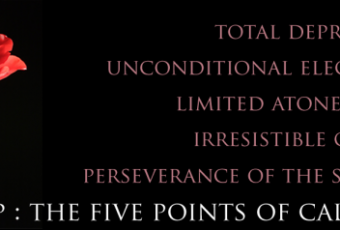
There is a tendency in many Christian circles to think that if a particular theological viewpoint can quote a lot of Scripture, it must be right. For example, in a recent book defending the Five Points of Calvinism (by David Steele and Curtis Thomas), the authors seem to think that if they just quote Scripture, they have proved their point. For each of the five points, they provide a theological explanation for the point, and then “prove” it by citing numerous pages of Scriptural proof-texts, without ever attempting an explanation of those texts. In the debate about three years ago between Bob Wilkin and James White, Dr. White used almost his entire opening statement to simply read Bible verses. The implication was that to prove Calvinism, all you have to do is read the Bible, and anybody is not a Calvinist, hasn’t read Scripture.

I call this shotgun hermeneutics. Those who use this tactic try to “blow you away” by the sheer number of verses they can quote which they feel proves their point. When you try to explain one or two of them to show that you are aware of these passages but have a different understanding, they will focus on all the other passages they quoted which you did not explain.

In my discussions, the dialogue generally goes like this:

Calvinist: My view is right because of Passages A, B, C, D, E, F, G, H, I, and J. If you would simply read and believe the Bible, you would agree with what God has said.

Me: I have read and studied the Bible, and am aware of all of those passages you just quoted. I simply understand them in a different way. Let’s take the first one as an example. (I then proceed to explain Passage A.)

Calvinist: Well, that certainly is a creative way to understand Passage A. But we know your interpretation is wrong, because of Passage B, C, D, E, F, G, H, I, and J.

Me: I wasn’t trying to explain those passages, but again, I am aware of them, and all of them can be understood in a similar way as Passage A.

Calvinist: No, they can’t be, because no one I’ve ever read has ever understood them that way. Here is what Piper, MacArthur, Sproul, and Calvin had to say about those passages. (They then proceed to quote their favorite authors.)

Me: But those are all Calvinistic authors. Of course they will agree with your interpretation.

Calvinist: Are you smarter or more godly than they are?

Me: No, of course not, but I do thin…

Calvinist: Then since they said that this is what those passages mean, and there are so many passages that teach Calvinism, Calvinism is the truth. After all, what about Passages K, L, M, N, O, P, Q, R, S, and T?

Me: Yep. Those are all in the Bible.

Calvinist: Hah! I knew you would be silenced by the logic of my system and the irrefutable evidence of my many Scriptural proofs. To God be the glory!

Me: Well, I’m not really silenced, nor am I convinced….

Calvinist: That’s because you’re a depraved heretic.

Me: Oookaay…I gotta go. See ya later.

Calvinist: I’ll be praying for your soul that you would repent from your darkness and be brought into the light!

If you have ever tried to discuss theology with someone who holds strongly to a particular system of theology, you know that this is how many of these discussions go.

Recently, I have noticed this tactic being used by some who disagree with me on various other issues. In their blogs and articles, they seem to imply that I have not read the Bible, and that if I did, I would see the truth of their position. They argue that when they read Scripture to me, I am silenced by the weight of Biblical evidence. When I attempt explanations of one or two passages they quoted, they say that my interpretation cannot be correct because of so many other Biblical passages which say something different, and furthermore, nobody they have ever read holds to my interpretation. Then I get called a heretic.

Shotgun hermeneutics and name calling is no way to proceed in theological discussion. To really get somewhere in theological debate, we must pick one passage at a time, and stick to it, camp upon it, walk around it, and work through it. Then, hopefully, we will arrive at two or three possible interpretations. Only then can we go to a second passage.

We do the same thing with passages A-Z. When all is done, we go back and reconsider all the evidence. You discard all interpretations that contradict other interpretations. Hopefully, you are left with only one possible interpretation. If not, you go back and try to decide which of the remaining views is the best.

This is the approach I used about 15 years ago to leave Calvinism. In the early 90’s, I was a five-point, hyper-Calvinistic, Lordship Salvationist. Then, a good friend challenged my thinking on James 2:14-26. I camped on that passage for a few months. I saw that my friend’s interpretation was one possible understanding. However, I wanted to reject that view, because of “all the other passages which contradicted it.” But he said, “That’s one option. Or maybe you are wrong on your understanding of all those passages too, and you need to study each one individually.” So that’s what I did. It took me about ten years, at the end of which time, every single point of Calvinism had fallen for me. I still read books and articles by Calvinists and those who disagree with my views. Why? Because if I am wrong in my understanding of a particular passage, I want to know. I hope you do too.

So don’t practice shotgun hermeneutics. Such a practice is not beneficial since all it does is take aim at other people’s heads in an effort to blow them away.

12 Comments »

Ever Wanted to Write Your Own Commentary?

Now you can.

I developed this website about a year ago, then forgot about it. I don’t have time to contribute to it, but I hope someone does, or I will just have to delete it. :’(

The link is www.youbible.org

3 Comments »